Wednesday, April 29, 2009

Sacred Triduum photos

As promised here are the photos from the Sacred Triduum this year. Click on the photos for the bigger image.

Maundy Thursday


Good Friday


Easter Vigil


Monday, April 27, 2009

Sacred Triduum videos

Here are some videos captured during the ceremonies of Holy Week and the Sacred Triduum.

Washing of feet during Maundy Thursday.

Stripping of altar with the psalm Diviserunt on Maundy Thursday.

Gloria and ringing of bells during the Paschal Vigil Liturgy.

Consecration during the Paschal Vigil Liturgy.

Sorry, but I couldn't get any videos for the Solemn Good Friday Liturgy. More pictures coming soon.

Saturday, April 18, 2009

Singing Satan's Parts?

Interesting article from Boniface on some new developments in Novus Ordo land. Disturbing, to say the least.

Thursday, April 16, 2009

Second Sunday after Easter

For April 26, 2009 which is the Second Sunday after Easter, we are going to sing:
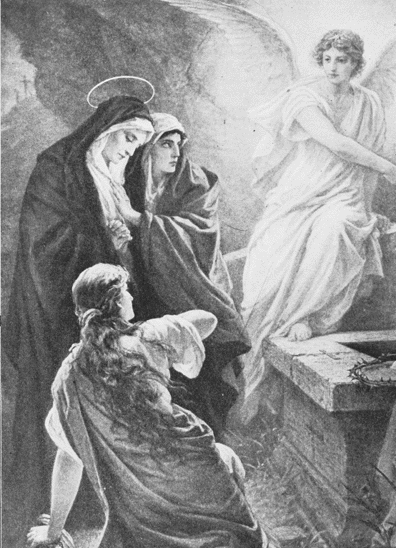
  1. Procession: Hail, True Victim, Life And Light
  2. Vidi aquam
  3. Introit: Misericordia Domini
  4. Kyrie I
  5. Gloria I
  6. Alleluia: Cognoverunt discipuli
  7. Alleluia: Ego sum pastor bonus
  8. Credo III
  9. Offertory: Deus, Deus meus
  10. Offertory hymn: Surrexit Christus Dominus (M. Praetorius)
  11. Sanctus I
  12. Agnus Dei I
  13. Communion hymn: Cor Jesu, Caritatis Victima
  14. Communion: Ego sum pastor bonus
  15. Recession: Regina Caeli, Jubila
Click on the links to hear samples where available.

Monday, March 30, 2009

Resurrection of Our Lord & Saviour Jesus Christ (the Solemnity of Solemnities)

For April 12, 2009 which is the Resurrection of OLJC, we are going to sing:
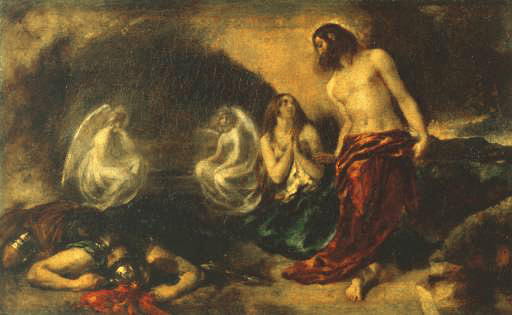
  1. Procession: Lift Thy Voice Rejoicing, Mary
  2. Vidi aquam
  3. Introit: Resurrexi
  4. Kyrie I
  5. Gloria I
  6. Gradual: Haec dies
  7. Alleluia: Pascha nostrum
  8. Sequence: Victimae paschali laudes
  9. Credo IV
  10. Offertory: Terra tremuit
  11. Offertory hymn: Regina Caeli, Jubila
  12. Sanctus I
  13. Agnus Dei I
  14. Communion hymn: Adoro Te Devote
  15. Communion: Pascha nostrum
  16. Recession: Jesus Christ Is Risen Today (SBH#044)
Click on the links to hear samples where available.

Monday, March 23, 2009

Paschal Vigil

For April 11, 2009 which is the Paschal Vigil, we are going to sing:
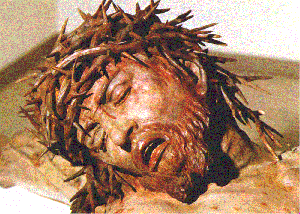
  1. Canticle: Cantemus Domino
  2. Canticle: Vinea facta est
  3. Canticle: Attende caelum
  4. Litany of the Saints (until "Omnes Sancti et Sanctae Dei, intercedite pro nobis")
  5. Canticle: Sicut cervus
  6. Litany of the Saints (cont. from "Propitius esto, parce nobis Domine")
  7. Kyrie I
  8. Gloria I
  9. Alleluia: Confitemini Domino
  10. Tract: Laudate Dominum
  11. Sanctus I
  12. Offertory hymn: Regina Caeli (A. Lotti)
  13. Communion hymn: O Quam Amabilis (G.P. da Palestrina)
  14. Communion: Alleluia (repeat after the end of Laudate Dominum)
  15. Antiphon: Et valde mane
  16. Canticle: Benedictus Dominus (repeat Antiphon Et valde mane at the end)
  17. Recession: Lift Thy Voice Rejoicing, Mary
Click on the links to hear samples where available. NOTE: The Credo and Agnus Dei are not sung/said in the Paschal Vigil Mass.

Good Friday

For April 10, 2009 which is Good Friday, we are going to sing the following:
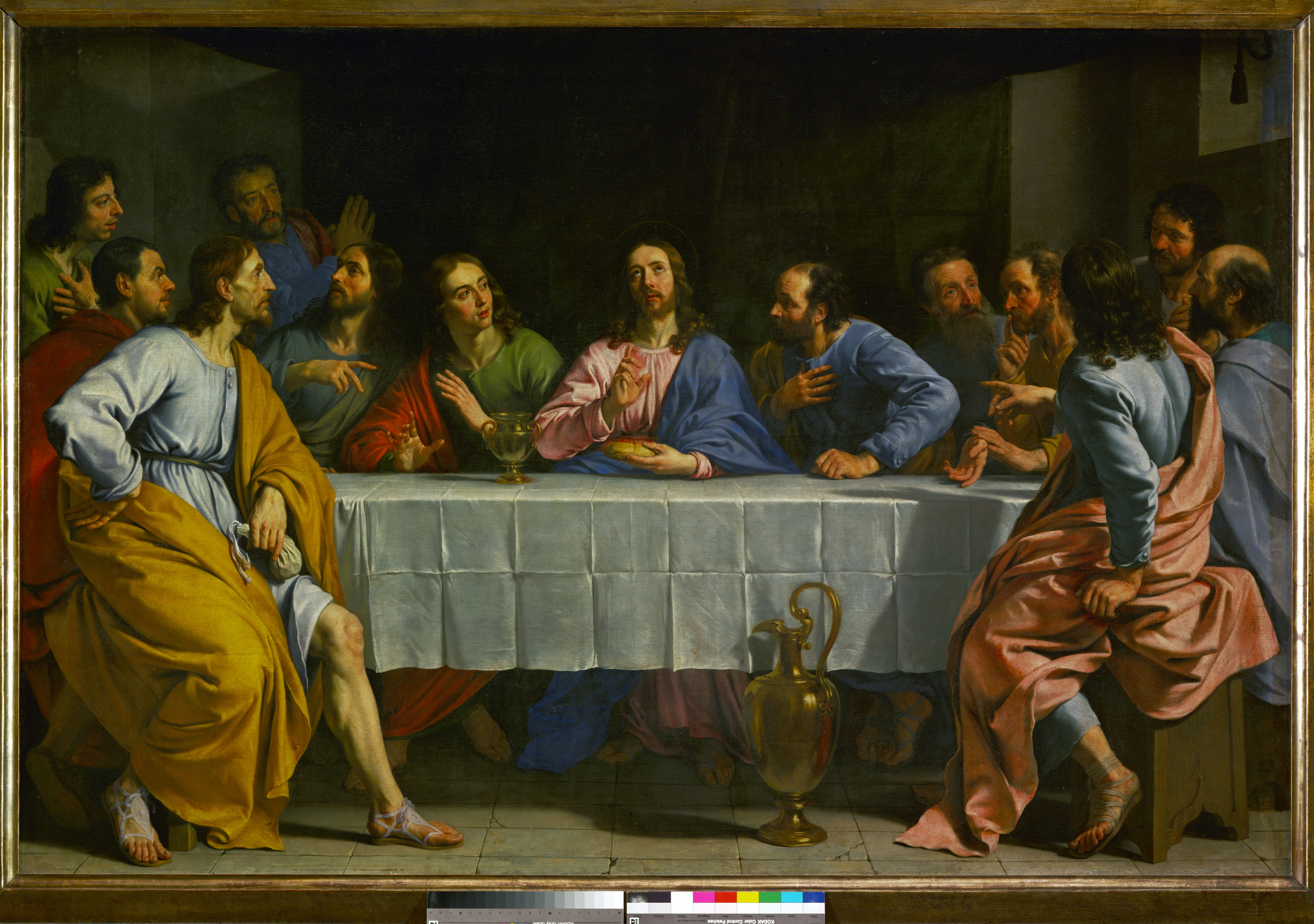
  1. Responsorium I: Domine audivi
  2. Responsorium II: Eripe me, Domine
  3. Responses to Ecce lignum Crucis in ascending tone: Venite adoremus (1) (2) (3)
  4. Improperia: Popule meus (during solemn adoration of the Cross)
  5. Antiphon: Crucem tuam (during solemn adoration of the Cross)
  6. Hymn: Crux fidelis (during solemn adoration of the Cross)
  7. Antiphon I: Adoramus te Christe (when the Blessed Sacrament is returned to the altar)
  8. Antiphon II: Per lignum (when the Blessed Sacrament is returned to the altar)
  9. Antiphon III: Salvator mundi, salva nos (when the Blessed Sacrament is returned to the altar)
  10. Communion: Psalm 21
Click on the links to hear samples where available.

Maundy Thursday

For April 9, 2009 which is Maundy Thursday, we are going to sing:
  1. Procession: Blessed Lamb
  2. Introit: Nos autem gloriari
  3. Kyrie IV
  4. Gloria IV
  5. Gradual: Christus factus est
  6. Antiphon: Mandatum novum (antiphons 6-13 are sung only if feet washing rite takes place)
  7. Antiphon: Postquam surrexit Dominus
  8. Antiphon: Dominus Iesus
  9. Antiphon: Domine, tu mihi lavas pedes
  10. Antiphon: Si ego Dominus
  11. Antiphon: In hoc cognoscent omnes
  12. Antiphon: Maneant in vobis
  13. Antiphon: Ubi caritas
  14. Offertory: Dextera Domini
  15. Offertory hymn: Quis Sicut Te
  16. Sanctus IV
  17. Agnus Dei IV (end with "miserere nobis" instead of "dona nobis pacem")
  18. Communion hymn: O Bone Jesu (M.A. Ingegneri)
  19. Communion: Dominus Iesus
During translation of the Most Blessed Sacrament to the altar of repose:
  1. Hymn: Pange lingua gloriosi
During stripping of the altar:
  1. Antiphon: Diviserunt and Psalm 21 (Deus, Deus meus)
Click on the links to hear samples where available.

Wednesday, March 18, 2009

10,000 Scores at CPDL

by Jeffrey Tucker

Last month, the number of choral scores available at the Choral Public Domain Library passed the 10,000 mark. This is a massive music library, and a spectacular one not only for its price ($0) but also for the huge range available that does not exclude the very music named by the Second Vatican Council as proper to liturgy.

The polyphonic tradition of the Renaissance had fallen out of use in the 1970s but as you look back further to evidence from preconciliar times, back to early in the 20th century, and the 19th century too, you see scant evidence of a broad use of the best music of the 16th century.

This might have been due to the relative difficulty of obtaining it. I can recall the days before CPDL and scouring the library's collected works volumes for these pieces and feeling overwhelmed and lost, and once having found a piece, looking to purchase it and having terrible trouble getting from here to there. Cathedral musicians might have had the resources and ability to seek and obtain, but not regular parishes.

Today, all is changed. I am not surprised that there is a whispering campaign against CPDL, given the number of entrenched commercial interests that it threatens. We are told that the editions are riddled with errors (exaggeration, and, in any case, with digital publishing, errors can be reported and fixed), that the music is actually illegal (ridiculous, and if there are plaintiffs with standing, let them come forward now), and that it will drive established Catholic music publishers out of business.

Let me address that last point. I don't doubt that its existence portends a dramatic upheaval in liturgical music publishing in the next few years. It was about 40 years ago that the industry went through another upheaval, with older companies dying and new publishers appearing. It was an astonishing thing to behold. Some companies made the transition, however, by adjusting to new realities. You know their names.

So it is today. There will be adjustments made all around. Rather than seethe and smear, the companies that are grousing about CPDL might consider adjusting their business model. Otherwise, they will find themselves like the newspaper industry today, which is melting into oblivion. I don't pretend to know what the future of music distribution is but we can be pretty certain that it will be different from the past.

Catholic parishes are famously unwilling to devote resources to their music programs, at least as compared with other Christian houses of worship. In particular, parishes have been unwilling to pay musicians. This is not just a bad habit; it is an entrenched feature of Catholic life and has been for a very long time.

Just the other day, I was reading a music catechism from 1936 that came close to anathematizing the payment of musicians in parishes, since their reward will be in heaven. Somehow the rule has not been so dogmatically applied to architects, grounds keepers, or the providers or water and electricity to parish grounds. No parish would reply to the water bill with the note that "we will not pay you because your reward will be in heaven."

Perhaps the new savings on sheet music will open up opportunities to invest in musical talent at the parish level. There is no question that a massive change is needed in this regard; perhaps the digital age will finally kick this movement in gear, so that the scarce resources fund people at the parish level rather than distant corporations.

What excites me most is how CPDL has given new life to the music of the Church, and done so at a time when this has never been more needed.

Source: NLM

Saturday, February 14, 2009

On carpets & acoustics

The great Jeffrey Tucker from NLM has hit it on the nail again. Read on, ponder, and apply it!

Rip up those carpets!

by Jeffrey Tucker

Every parish struggles with acoustical problems, some because of the large space, but some because of the wholly unnecessary existence of carpet in the nave and sanctuary. Many parishes have made the huge mistake of carpeting their church space because someone on someone on some know-nothing committee thought that the carpet made the place feel warmer and friendly—like a living room—and perhaps too, someone found the echoes of children crying or hymnbooks dropping to be annoying.

Sadly, carpet is a killer of good liturgical acoustics. It wrecks the music, as singers struggle to overcome it. The readers end up sounding more didactic than profound. And even the greatest organ in the world can't fight the sound buffer that carpet creates. All the time you spend rehearsing, and all the money paying a good organist or buying an organ, ends up as money down the carpet drain.

Elementary errors are involved in the decision. When the church is being constructed and tested for sound, it is during a time when it is empty of bodies. The decision makers stand around and note that a new carpet won't make that much difference. Once installed, it only appears to muffle the sound of steps and things dropped. But once the place is packed with people, something new is discovered. The sound is completely dead—dead in the sense that it doesn't move. This is not the sound of liturgy.

This is when the acoustic engineers are brought in, usually from some local firm that specializes in studio recordings or some such. What they will not tell you is that you can save the expense of massively pricey sound systems and mixing tricks simply by pulling up the carpet. They don't tell you this because they are not in the carpet removal business. Their job is to make the existing space sound better. Sadly, this means sometimes tens and hundreds of thousands of dollars in equipment, the effect of which is to make it impossible for anyone to be heard unless surrounded by microphones.

Again, this is no solution at all. Chant will never sound right. The organ becomes a complete waste. The instruments and vocal styles that work in a space like this belong more to the American Idol genre of music than sacred music. This is a true tragedy for any parish seeking to reform its liturgical program. I'm very sorry to say this, but it pretty well dooms the reform. You can chant and play Bach all you want but you will never be able to overcome the acoustic limitations.

What to do? The decision makers need to gather the courage to take action. Pull up the carpets immediately. It might leave concrete or wood or something else. It might be unsightly until the time when tile or new concrete or wood can be installed, but the mere appearance alone will call forth a donation perhaps. What's important is that immediately the sound will be fixed, and the parish will have save untold amounts in paying the acoustic firm. Not only that: funds will be saved from future carpet cleanings, repairs, and replacements.

Much of this information I learned from Reidel and Associates, a firm that does consulting on worship spaces. I ordered their pamphlet about sound called "Acoustics in the Worship Space" by Scott R. Riedel (St. Louis: Concordia Publishing House, 1986). It is quite technical and very informative. Here is what he says about floors on page 17.


The floor is typically the building surface that is largest and nearest to worshipers and musicians. It is important that the floor be reflective of sound, particularly near musicians, since it provides the first opportunity for much sound energy to be reinforced. Carpet is an inappropriate floor covering in the worship space; it is acoustically counterproductive to the needs of the worshipers.

The mood of warmth and elegance that carpeting sometimes provides can also be provided with acoustically reflective flooring such as quarry tile or wood that is of warm color and high quality. The notion that the worshiper covers the floor surface, making its material composition acoustically unimportant is false. The large floor area of the worship space bas great acoustical influence. Appropriate floor materials include slate, quarry tile, sealed wood, brick, stone, ceramic tile, terrazzo, and marble.

Walk and Ceiling. Durable, bard-surfaced walls and ceiling are also essential for good acoustical reflections. The ceiling is potentially the largest uninterrupted surface and therefore should be used to reinforce tone. Large expanses of absorptive acoustical ceiling tile are to be strictly avoided. Appropriate wall or ceiling materials include hard plaster, drywall of substantial thickness, sealed woods, glazed brick, stone, med and painted concrete block, marble, and rigidly mounted wood paneling.

The construction of walls, floors, and doors should retard the transmission of noise into the space from adjoining rooms, from the outdoors, or via structure-borne paths. Sound attenuators or absorptive material may be fitted to heat and air ducts to reduce mechanical noise also.

Some may consider using absorbing materials such as carpeting or acoustical tile to suppress noise from the congregation. Noise from shuffled feet or small children is usually not as pervasive as might be feared. It is unwise to destroy the proper reverberant acoustical setting for worship in deference to highly infrequent noisy behavior.

Let me now address the issue of noise. A building in which you can hear your footsteps signals something in our imaginations. It is a special place, a place in which we are encouraged to walk carefully and stay as quiet as possible. Pops, cracks, thumbs, and sounds of all sorts coming from no particular direction is part of the ambiance of church, and its contributes to the feeling of awe.

It was some years ago that I attended a concert of organum—three voices singing early medieval liturgical music—at the National Cathedral in Washington, a vast space. There were only three small voices near the altar, and I was at the back and the people singing looked like tiny specs. Moving my foot a few inches created a noise that could be heard for 20 feet in all directions, loud enough to drown out the music. As a result, everyone sat in frozen silence, fearing even to move a muscle. This went on for more than a full hour. It was a gripping experience.

The closer we can come to creating this environment in our parishes, the holier the space will sound and feel. I've personally never heard an echo that is too extended for worship. It is possible I suppose but I've never experienced it.

One final point about Church acoustics that needs to be added here. The Introit of the Mass is not: "Please turn off your cellphones." This line is increasingly common at the start of Mass. This really must end. Yes, it is a good thing for people to turn off cell phones but instructions to that effect are not what should be the first words one hears at the start of Mass.

And please consider that people are not dumb as sticks. Cell phones are a normal part of life now, and we are all learning to keep them off in any public lecture or event such as a worship service. These things take care of themselves over time. For someone's cell phone to ring ends up being a warning to everyone else for the future.

Saturday, February 07, 2009

Another disobedient Asian prelate

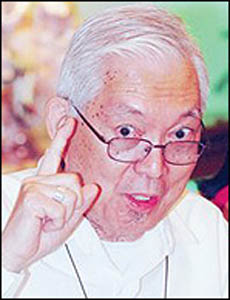
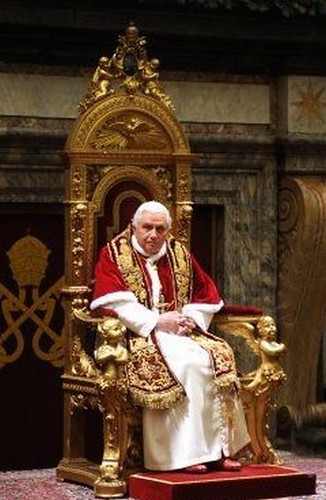
The Archdiocese of Manila has just released the most restrictive application of Summorum Pontificum that I have ever seen. I really cannot understand the implacable opposition of Cardinal Rosales to the Missal of 1962.
http://www.rcam.org/Homilies/2009/cardinal_rosales/archdiocesan_guidelines_on_the_celebration_of_the%20Mass_according_to_the_rite_of_the_roman_missal_published_in_1962.html

ARCHDIOCESAN GUIDELINES ON THE CELEBRATION OF THE MASS ACCORDING TO THE RITE OF THE ROMAN MISSAL PUBLISHED IN 1962 (TRIDENTINE MASS)

In accordance with the norms laid down by the Apostolic Letter, issued motu propio, of His Holiness, Pope Benedict XVI, Summorum Pontificum, We hereby establish the following guidelines and conditions on the celebration of the Mass according to the rite of the Roman Missal published in 1962 (Tridentine Mass) in the Archdiocese of Manila:

The regulation of the celebration of this extraordinary form of the Mass belongs to the Archbishop of Manila, through the Minister of the Ministry for Liturgical Affairs of the Archdiocese of Manila.

This form of Mass is to be celebrated only at the Christ the King Chapel of the Metropolitan Cathedral of Manila once a month, but not on Sundays and Solemnities.

The presider at this form of celebration should be a priest duly appointed by the Archbishop of Manila.

To ensure the solemnity and orderliness of the celebration of this form of Mass, the participation of other ministers (i.e., lectors, Master of Ceremonies, servers, choir, etc.) in the liturgy is to be determined and regulated by the Ministry for Liturgical Affairs of the Archdiocese of Manila.

The celebration of the extraordinary form of the Mass in this Chapel is open to any individual or group in the Archdiocese of Manila who may have the desire to participate in such celebrations. Further requests from individuals or groups from the parishes of or who belong to the Archdiocese of Manila to celebrate this form of Mass is to be directed to join the monthly celebration at the Manila Cathedral.

It is highly encouraged that a missal / booklet of the rite in Latin and English be prepared to help the faithful follow the celebration. It is like wise encouraged that those who will participate in this Mass undergo a catechetical orientation before the celebration.

The Archbishop of Manila has jurisdiction over this celebration and, therefore, can decide to limit or discontinue this monthly celebration anytime he judges that this is not consonance with the whole pastoral direction of the Local Church.

Given in Manila, this 8th day of December 2008.

+GAUDENCIO B. CARDINAL ROSALES
Archbishop of Manila

Sunday, January 25, 2009

Thank you, Holy Father!


May the day come soon when we can all together sing the Te Deum and Masses by SSPX priests in diocesan parishes and cathedrals are a regular scene. Ad multos annos!

Wednesday, January 14, 2009

A Great Homily on Chant

Homiliy for the Church Music Association of America, Gregorian Chant Workshop, Founders Chapel, University of San Diego
by Father Cávana Wallace

What is the common link between the days after the Epiphany which began with the arrival of the Magi bearing their gifts to the new-born messiah in Bethlehem, the later event of Christ’s healing of the leper we have read in today’s Gospel and the setting of this liturgy within the framework of a workshop on Church music? How can we possibly bring all three of these elements together? The opening lines of the early 19th century popular parish hymn might come to mind, “Praise, my soul, the King of Heaven; To His feet Thy tribute bring! Ransomed, healed, restored, forgiven, who like me his praise should sing?”

Today’s Gospel sets our blessed Lord in the context of his healing ministry, one which demonstrates his power as God as well as announcing the Kingdom of heaven, both of which point to his mission to restore order to creation, and to bring harmony out of chaos.

Where there is disorder in any relationship, be it with God, neighbor or within oneself, its effect resonates a disturbance in mind, body and soul. In this context sickness and disease are telltale signs that there is something out of sync in our world, out of tune, the reason we need a savior.

Contemplating this further, I imagine that the scene of the Gospel showing our Blessed Lord cleansing the leper and healing the sick, although dramatic and exciting, was nevertheless quite noisy. Within this context of his healing ministry, demons would often scream and shout at our Lord as they were being cast out of the physically vulnerable and the weak of mind. Frenzied, excitable crowds would no doubt be caught up in the waves of emotions generated by such events. Christ stands in the middle of a battlefield.

In the midst of all this noise, having brought healing to the leper, Our Lord asks for silence. But there is that human temptation to resist stillness, maybe the reason we are told in the Gospel today that Jesus would withdraw to deserted places to pray – away from the clatter and clamor of daily life and living, to sacred rendezvous places where the sound of heaven could be gently heard.

In the classical work of the Divine Comedy, which describes in poetic fashion, both the liturgy of heaven and of hell, the Florentine poet Dante draws this point out by comparing hell as a place of constant noise with heaven as a place of silence and music.

In the Inferno, the “soundscape” of Hell is characterized by disharmonic harshness and acoustic unpleasantness, screams and lamentations, waling and the grinding of teeth. This perverted type of music is so terrible that it is overpowering and Dante must ultimately cover his human ears, a far cry (literally) from the melodic harmonies which the poet describes resonating through the heavens.

We can only surmise what the music of heaven is like and the peace and the refreshment it must give. But on this side of the veil within the unfolding of the Church’s liturgy, Gregorian chant must come very close to the music of heaven. This is not a private opinion. The Church has seen it wise to attach particular indulgences to the singing of Gregorian chant. Why? It is because such sacred music can and does do something to the soul.

The setting for this week’s intensive workshop on this sacred form of music has been the University of San Diego. It was thought, at one time, that maybe it would become the Notre Dame of the West. However, I conclude with a poem by Charles Phillips, professor from 1924-1933 of the English Department of the one and only Notre Dame, renowned for giving generations of his students a love of Catholic faith, Catholic literature and Catholic culture. Simply titled “Music”, its words capture what I think we have tried to touch and gently press upon during this past week and in particular through the Church’s liturgy we are celebrating today.


Music

There is a hunger in my heart,
A longing in my soul, to hear
The voice of heaven, o’er the noise
Of earth that so assails mine ear:

For we are children of the skies,
Exiles and wanderers from home-
See how the stars like candles burn
In windows far from where we roam:

Like candles lit to show the way,
Dear kindly beacons, sure and bright!
But O the heavy journeying,
And O the silence of the night! –

The vasty silences that lie
Between the going and the goal!
Will not God reach a friendly hand
To lift and lead my tired soul?

Will not God speak a friendly word
Above the tumult and the din
Of earthly things – one little word
Above the voice of care and sin?

He speaks. He answers quick my prayer.
He opens heaven’s lattice wide;
He bids me bathe my brow in airs
Of heaven like a flowing tide!

He speaks; He gives unto my soul,
Unto my listening ear, its meed:
He breathes upon me with the breath
Of music – and my soul is freed

And I am lifted up and held
A little while, a child to see
The beauty of my Father’s House
Which shall no more be shut from me.

Source: http://printedaspreached.blogspot.com/2009/01/homiliy-for-church-music-association-of.html

Tuesday, January 06, 2009

Happy Epiphany 2009

A blessed Epiphany to all our readers and your loved ones wherever you may be! May the Christ Child imparts His choicest blessings for the year ahead.

Thursday, December 18, 2008

Sunday within the Octave of Christmas

For Dec 28, 2008 which is the Sunday within the Octave of the Nativity of Our Lord & Saviour Jesus Christ, we are going to sing the following:
  1. Procession: O Come, All Ye Faithful
  2. Asperges me
  3. Introit: Dum medium silentium
  4. Kyrie VIII (De angelis)
  5. Gloria VIII
  6. Gradual: Speciosus forma
  7. Alleluia: Dominus regnavit
  8. Credo IV
  9. Offertory: Deus enim firmavit
  10. Offertory hymn: Salve Regina Caelitum
  11. Sanctus VIII
  12. Agnus Dei VIII
  13. Communion hymn: Resonet In Laudibus
  14. Communion: Tolle puerum
  15. Recession: Angels We Have Heard On High
Click on the links to hear samples where available

Saturday, December 06, 2008

An Open Letter to Praise and Worship Musicians

from the NLM's Jeffrey Tucker...

You are part of a Catholic generation that has chosen music as a path of spiritual discovery and expression within Catholicism, and music has been central to your own path toward greater understanding of the faith and its place in your life. You are using this gift to give to others, precisely as St. Paul instructed the Corinthians to do. You do this in retreat settings but, more and more, in worship settings, including Mass, as a means of helping others find what you have found.

You are not unaware that the style of music you have chosen has no liturgical precedent in the history of the faith. It is not that you have overtly rejected tradition in favor of innovation. Many of you have written to me that you would greatly appreciate a parish setting in which Gregorian chant and polyphony (the only two musical forms explicitly cited at Vatican II as proper to the Roman Rite) were sung as part of Mass.

But this is not the parish setting you inherited and it doesn't seem like an option now. The historical context here is everything. You were the third generation raised after the major changes following the Second Vatican Council. When your parents were very young, the standard music was new and innovative, but by the time you heard it, it had grown old and tired.

And there didn't seem to be much of it: the same few Glorias and Holy Holys, and about twenty or so songs sung again and again, most of it suggestive of half-hearted attempts at folk music of some sort. This was what was considered "traditional Catholic music," and it didn't seem to mean much to young people by the time you were coming of age.

The music problem reflected a larger problem. In your childhood and early teen years, you were part of a parish structure that had settled into a kind of routine that you found to be uneventful and static, even faithless. The catechism materials used in your CCD classes, even for confirmation, were unchallenging and cliché. The adult teachers and leaders in your parish lacked enthusiasm.

Even Mass, as much as you tried to throw yourself into it, began to seem blasé. There were new and odd names for everything: confession behind a screen became face-to-face reconciliation, CCD became CFF, Mass became the "Eucharistic celebration," processionals were "gathering songs," and you knew nothing of traditional devotions like Holy Hours and novenas. The ghosts of the Catholic past were everywhere in movies and popular culture: people kneeling for communion, priests in black for Requiem Masses, Latin, elaborate vestments, stories of rigorous server training, incense, and tough nuns in schools – but you knew none of this. In many ways, the world in which you grew up had already been thoroughly de-Catholicized, and this was tragically true even of your own parish.

Gregorian chant was the same. It variously became popular on the radio and in bestselling CDs but it was sung by monks in far-off lands. It wasn't the music of the parish. Even such common tunes such as Pange Lingua and Adoro Te—the last remnants of a repertoire of tens of thousands of chants—were finally put to rest sometime in the 1980s. No one in the parish knew a thing about chant, and neither did there seem to be a way to find out more.

It was your misfortune that you inherited what can only be described as a desert, and you can vaguely recall being bored with the whole thing. At some point in your teen years, that changed with a retreat or a parish mission or possibly World Youth Day or some other occasion. There was a spiritual awakening in your life, and it centered on the realization of the powerful presence that Christ can have in your life. It brought you back to the confessional you had long neglected, and gave you a new appreciation of the Real Presence in the Eucharist, as well as the power of the Rosary and of features of Catholic life. This was a transforming event in your life.

This event was tied to the form of music called Praise and Worship, with its characteristic repeating phrases and dramatic beats and sounds. You could hear it on the radio. You bought the CDs. You followed the Catholic bands of the new generation. And yet in your own parish, the music was very different. It was then and still largely remains that "traditional Catholic music" from the 1970s that had made such a splash in the years immediately following the Council but didn't inspire you in the same way.

This was when you decided to apply your own musical skills to making a difference, usually for a Mass set aside as Life Teen or the Youth Mass. No one said that there was anything strange about this. Sure, some people objected to the style of music, that it was more like rock music than sacred music. But this really an argument about taste. Why should you be expected to adopt the tastes of your parents and their parents? Their music too was based on the style of their times, and it doesn't speak to your generation. This new Praise and Worship music connects with your time and your own religious revival. To sing it for Mass is only a matter of sharing your gift with others, in response to the call for evangelization.

What about Gregorian chant? You grant that there is an appeal here. You among many have the impression that choosing a chant rather than a Praise and Worship piece is merely a judgment call, a choice based on resources and timing. It is possible to sing Adoro Te instead of something else. In so doing, you are doing what Vatican II called for. All the better, perhaps, is to add some good chords and rhythm underneath it and sing it in a more familiar style.

What is truly tragic is that no one has alerted you to the real significance of chant. It goes far beyond using a chant as one of the four songs you can pick for Mass. The Gregorian chant grew up alongside the Mass itself, one step at a time. Some might date from the early Church, which sang the Psalms exclusively. The tradition developed as the liturgy developed over the next one thousand years as the parts of the Mass were organized and systemized into a liturgical year. There was music to go with the prayers. It was sung by martyrs and saints and heard in all times and all nations where the faith thrived.

The essential musical structure of the Mass as it emerged in the middle ages had an Entrance prayer that was set to chant. This is called the Introit. Sometimes you hear the first word of the chant used to describe the Mass of the day. This is where we get the terms "Gaudete Sunday," "Laetare Sunday," and "Requiem Mass." What is called the "gathering song" or the "processional hymn" is really a replacement for this Introit.

When Vatican II said that the chant should have primacy, what it means is that this Introit should be sung, and that when it is not possible to sing it, the preference for chant still remains.

It is true with other parts of the Mass too. The Offertory is not a musical intermission but the name of a real prayer that is set to music. The same is true of Communion. These are gorgeous chants. Even the Psalm has a melody in the chant books. The more you get to know these treasures, the more it strikes you just how unified the text and the music are. Their assignment is not at all random.

Often the melody clearly reflects the story of the text, so that the melody goes up when speaking of Heaven and down when speaking of humility. The complexity of them can be enrapturing the more you study them. You find beautiful presentations of Gospel narratives and parables. Each chant serves a particular musical function. The Introit and Offertory are processional chants, for example, so they have a forward motion with less elaborate musical expression on individual words. The Psalm chants are more for reflection, so they are long and elaborate.

The chant, then, is not just one choice among many. It is the music of the Mass itself, and the only form of music that truly qualifies by definition. The chants mentioned above are called "propers" and they change week to week. There are also chants for the "ordinary" of the Mass, so-called because their text remains the same. There are parts for the people: Kyrie, Gloria, Credo, Agnus Dei. You have heard a few of these, most likely the ones people have started to sing for Lent. But the Church has given us fully 18 sets of these pieces of music, and you can see from their structure that they are intended for everyone to sing.

In the experience of our parish, people can pick up these ordinary chants rather quickly. They love singing them. They don't need accompaniment. They use the human voice alone, the very instrument that God has given all of us. This way there is an absence of elitism in this music. It needs no specialists who know how to play piano and guitar and drums. Actually, you don't even need the music really. In fact, for the first thousand years of Christianity, the chant was sung without being written out in a way that could be widely distributed. It was learned and carried forward by frequency of use, the way people learn "Praise and Worship" music today.

There are other marks of chant that make it distinctive. It lacks a regular beat-style rhythm such as that we hear in rock, country, soul, blues, or any other style. It is what is called plainsong, so there is an underlying pulse but it doesn't cause you to want to tap your toe or dance. What it does do is draw the senses upward toward the Heavens. It assists in the goal of all liturgy, which is to take us out of time and help us pray and listen to eternal things. In contrast, music with a beat keeps us grounded and internal.

Another feature of chant is its humility. A major problem with Praise and Worship music is that it tends to focus everyone on the person doing the performing. The bands are featured in the front of the church. The band members are showered with complements. The singing style elicits a kind of egoism that probably makes you uncomfortable but is integral to popular styles. Chant is completely different because it does not seek to put the talent of the singer on exhibit. Instead, it is all about community prayer. The ego is buried. It doesn't unleash the self but rather requires a submission of self to holiness. In this way, it is like the faith: as St. John Baptist said, let me decrease and let him increase in me. This is what the chant does – what the chant requires.

You are right to suspect that chant requires a substantial change of pace. It is not just a matter of substituting one song for another. The chant leads the embrace of a completely different approach to liturgy itself. The music serves the liturgy and the liturgy serves God. Where does that leave the singers and the community? Precisely where we should be: not as consumers but as servants.

You are all too aware that you were cheated out of a robust form of Catholicism when growing up, not by design but merely because of the unfortunate timing. These were difficult days. In the same way that many aspects of the faith were not well presented to you, the music of the Church has not been presented to you either. But you were born into these times, as a musician, for a reason. Perhaps you are being called to make a difference.

The Pope has made the restoration of sacred music a centerpiece of his liturgical goals. He speaks about the issue often, and has written so much about it. Perhaps it is time to consider that he is onto something profoundly important here.

The Pope speaks of "two fundamental types of music." One he associates with Apollo, the ancient mythical god of light and reason. "This is the music that draws senses into spirit and so brings man to wholeness. It does not abolish the senses, but inserts them into the unity of this creature that is man. It elevates the spirit precisely by wedding it to the senses, and it elevates the senses by uniting them with the spirit. Thus this kind of music is an expression of man’s special place in the general structure of being."

The other type of music he says is Dionysian: "It drags man into the intoxication of the senses, crushes ra¬tionality, and subjects the spirit to the senses." Rock music may have merit outside of liturgy but in liturgy, the Pope writes that it is "in opposition to Christian worship" because its musical structure encourages people released from themselves by the experience of being part of a crowd and by the emotional shock of rhythm, noise, and special lighting effects. However, in the ecstasy of having all their defenses torn down, the participants sink, as it were, beneath the elemental force of the universe.

Where does Praise and Worship fit into this divide? Be honest with yourself and consider that it tends more toward Dionysius than Apollo. Every Pope since the earliest years has made a similar distinction between the sacred and the profane, and it was Pius X who stated so clearly that the standard by which all music at Catholic liturgy must be judged is the chant.

That doesn't mean that chant is the only music appropriate for Mass. Renaissance composers sought to elaborate on the chant with new forms that retained its spirit, and many modern composers are doing the same. There is also a place for English chant and for newly composed Psalms. What the chant provides in these cases is a standard to measure its suitability. It is essential that it remain the foundational song of the Catholic Church, for if we don't know or understand the foundation, it is impossible to make any judgment at all.

If the enterprise of learning something completely new sounds daunting, keep in mind that no one can become completely familiar with all chant. That would take several lifetimes. We are all in a state of relative ignorance on this subject as compared with the mind of the Church and the experience of tradition. It is the same with Catholic theology: no one can know it all. But that should not stop us from learning what we can, practicing what we can, and doing our part to hand on the tradition to the next generation.

We have a job to do, a job that we have been assigned. We are not the first to have been given this task. At other points in history, the chant was nearly completely lost, buried in the confusion over passing musical fashion. It returned again and against through the prayerful efforts of faithful musicians who were willing to give of themselves to bring the beauty back and make it live in our parishes in glorious ways.

The first step is to encounter the chant and consider is beauty. "The encounter with the beautiful," writes the Pope, "can become the wound of the arrow that strikes the heart and in this way opens our eyes, so that later, from this experience, we take the criteria for judgment and can correctly evaluate."

Perhaps the chant will touch you as it has touch me and millions upon millions of others since the earliest years of the faith, and will continue to touch people until the end of time. If it does, you too might enter into the stream of living persons who have sung the chant and played some role in bringing to the world the most beautiful music this side of heaven.

Sacred Music Colloquium


I challenge any of the dioceses here in the region to organize something similar, if they are really true in wanting to keep the "spirit of Vatican II"! For those who are not familiar with Vatican II, it says:

"The treasure of sacred music is to be preserved and fostered with great care. Choirs must be diligently promoted, especially in cathedral churches; but bishops and other pastors of souls must be at pains to ensure that, whenever the sacred action is to be celebrated with song, the whole body of the faithful may be able to contribute that active participation which is rightly theirs, as laid down in Art. 28 and 30."

and...

"The Church acknowledges Gregorian chant as specially suited to the Roman liturgy: therefore, other things being equal, it should be given pride of place in liturgical services."

and...

"But other kinds of sacred music, especially polyphony, are by no means excluded from liturgical celebrations, so long as they accord with the spirit of the liturgical action, as laid down in Art. 30."

and...

"In the Latin Church the pipe organ is to be held in high esteem, for it is the traditional musical instrument which adds a wonderful splendor to the Church's ceremonies and powerfully lifts up man's mind to God and to higher things."

All quotes taken from the Constitution on the Sacred Liturgy Sacrosanctum Concilium.

Wednesday, December 03, 2008

Lauridsen's O Magnum Mysterium


Sung by the UST Alumni Singers (The Pontifical University of Santo Tomas, Philippines). Another fine example of modern, yet liturgically sound, sacred music.

Monday, December 01, 2008

Carols Before Midnight Mass

Here is the order of carols/hymns to be sung before Christmas Midnight Mass begins.
  1. I Wonder As I Wander (Appalachian carol)
  2. Adam Lay Ybounden (Ord)
  3. Alma Redemptoris (Plainsong - Simple tone)
  4. Ave Maria (T.L. de Victoria)
  5. Lo, How A Rose E'er Blooming
  6. Congregation Hymn: Once In Royal David's City
  7. Congregation Hymn: O Little Town Of Bethlehem (tune: Forest Green)
  8. Congregation Hymn: Silent Night
  9. O Holy Night
  10. Congregation Hymn: In Dulci Jubilo
  11. Congregation Hymn: What Star Is This
  12. Congregation Hymn: O Come All Ye Faithful
  13. Quem Pastores Laudevere
  14. Congregation Hymn: Angels We Have Heard On High
  15. Congregation Hymn: Hark The Herald Angels Sing
Click on the links to hear samples.

Saturday, November 22, 2008

Festival of 9 Lessons & Carols in Kuala Lumpur


SONGS & READINGS FOR THE FESTIVAL OF 9 LESSONS & CAROLS
Prelude: Gloria (Vivaldi)
Anthems: A Christmas Round & Riu, riu, chiu
Congregational Opening Hymn: Once in Royal David’s City
1st Carol: Adam Lay YBounden (Ord)
1st Reading
2nd Carol: In the Bleak Midwinter
2nd Reading
Congregational Hymn: Angels We Have Heard on High
3rd Carol: Ett Nyfött Barn
3rd Reading
4th Carol: Stille Nacht
4th Reading
5th Carol: Mary’s Boy-Child
5th Reading
6th Carol: Mariä Wiegenlied
6th Reading
Congregational Hymn: O Little Town of Bethlehem
7th Carol: Bailero
7th Reading
8th Carol: The Coventry Carol
8th Reading
9th Carol: Still, still, still
9th Reading
Closing Congregational Hymn: O Come All Ye Faithful
Postlude: O Magnum Mysterium (Lauridsen)

Disclaimer: This is not meant to be an endorsement of the Presbyterian religion, but merely for the sake of exposure to quality sacred music.

Tuesday, November 04, 2008

What shall we name this?

From somewhere closer to home, we have some Filipino inmates asked (or forced?) to perform some kind of dance with a thousand arms, during a mass by Cardinal Vidal. Look at this video that I stumbled upon accidentally:

and the first thing that came to my mind was this:

Know why "Rock Masses" are such pathetic lame ideas when teenagers know they are better off going elsewhere for rock music? I guess the lesson here is.. if Catholics wants to imitate something, they'd better do a darn good job at imitating, else forget it because it will look like a cheap imitation at first sight.

Friday, October 31, 2008

Pius XII reciting Pater Noster

This is THE right (some will read that as Roman!) way of Latin pronunciation.

Friday, October 17, 2008

Nova Organi Harmonia

Maestro Jeff Ostrowski has graciously made available for free, the Nova Organi Harmonia Gregorian chant organ accompaniments here. Also listed are other accompaniment materials. This is definitely a treasure trove for church organists everywhere. This was made possible by Corpus Christi Watershed, the same non-profit Catholic institute for the arts that commissioned the Chabanel Psalms.

Friday, October 10, 2008

Josef Rheinberger's Abendlied

I personally feel this piece is one of the better German masterpieces of sacred music that I've sung in choir. These are the kind of vernacular music that should be permitted in church, not "Come On And Celebrate" or that campfire song "Pass It On".

Stay with us, because it is towards evening, and the day is now far spent. - Luke 24:29

Wednesday, September 17, 2008

Pamintuan's Pater Noster

A very sublime Pater Noster, sung by the Philipine Madrigal Singers, composed by John August Pamintuan. Proof that modern sacred music can be done well.

Thursday, August 28, 2008

Exaltation of the Holy Cross

For September 14, 2008 which is the feast of the Exaltation of the Holy Cross, we are going to sing:
  1. Procession: Crown Him With Many Crowns
  2. Asperges me
  3. Introit: Nos autem gloriari
  4. Kyrie IV (Cunctipotens genitor Deus)
  5. Gloria IV
  6. Gradual: Christus factus est
  7. Alleluia: Dulce lignum, dulce clavos
  8. Credo I
  9. Offertory: Protege, Domine
  10. Offertory hymn: Crux fidelis (R. Kühnel)
  11. Sanctus IV
  12. Agnus Dei IV
  13. Communion hymn: Vexilla Regis Prodeunt (SGH#182c)
  14. Communion: Per signum crucis
  15. Recession: Hail Redeemer, King Divine (C. Rigby)
Click on the links to hear samples where available.

Tuesday, August 26, 2008

Pope underscores importance of music for transmitting experiences of the soul

Castelgandolfo, Aug 25, 2008 / 08:39 pm (CNA).- Pope Benedict XVI expressed gratitude for the concert performed in his honor at the Swiss Hall of the Apostolic Palace in Castel Gandolfo this weekend, and in his remarks at the conclusion of the concert he emphasized the importance of music in transmitting the profound experiences of the soul.

After thanking Ivonne Timoianu, who played the violoncello and the former Austrian ambassador to the Holy See, Christoph Cornaro, who played piano, for the “magisterial performance” of Franz Schubert’s “Winter Journey,” Benedict XVI noted that the piece describes “the intense atmosphere of sad loneliness caused by his [Schubert’s] delicate state of health and his sentimental and professional disappointments.”

“It is an interior journey that the celebrated Austrian composer wrote in 1827, just one year before his premature death at the age of 31,” the Pope added.

“When Schubert brings a poetic text into his universe of sound, he performs it through a melodic link that penetrates the soul with sweetness, bringing the listener to feel his same nostalgic consummation, the same call of that truth of the heart that goes beyond all rationality. In this way a picture is born that speaks of genuine everyday life, of nostalgia, of introspection and of the future,” the Holy Father continued.

“The spontaneous and exuberant young Schubert was successful in communicating—to us here tonight as well—what he lived and experienced. He is worthy therefore of the universal acclaim that is given to this illustrious genius of music, who honors European civilization and the great culture and spirituality of Christian and Catholic Austria.”

“Comforted interiorly by the splendid musical experience of tonight, we renew our gratitude to those who have promoted this concert and those who have magnificently performed it,” the Pontiff said in conclusion.

Source: Catholic News Agency

Saturday, August 16, 2008

Happy Feast

A very happy feast of our Blessed Mother's Assumption into Heaven to all of you! Here's something for the senses on this solemn feast.

Thursday, August 14, 2008

CDW Issues Directives on the Use and Translation of the Name of God in the Liturgy and Liturgical Music

The Congregation for Divine Worship and the Discipline of the Sacraments recently issued directives on the use of “the Name of God” in the Sacred Liturgy. Here are the directives:


You can read the entire text here: Letter to the Bishop's Conferences on "the Name of God"

Presumably this would retroactively effect some popular liturgical music that has been used in many English speaking parishes following the Council, including by the likes of Fr. Dan Schutte, S.J.

Source: NLM

Friday, August 08, 2008

Motets during a Requiem Mass

Something useful from a Q&A forum:

Q: Can you tell me if the Panis Angelicus and the Ave Maria can be properly sung at a Missa Cantata Requiem Mass during the Offertory and Communion times only? If sung, would this be following the Rubrics according to the allowance now (1962 Missal)?

A: St. Pius X's motu proprio on church music, "Tra le Sollecitudini" disallows MOST solo-singing (as distinct from the liturgical intoning done by one or more chanters).

That said, it is PERMISSIBLE to sing "Ave Maria" during the Offertory of a Requiem Mass, FOLLOWING the chanting of the proper Offertory text.

However, since the Requiem Offertory, "Domine Iesu Christe" is virtually the ONLY Offertory in the Latin Rite which retains an obligatory Verse, "Hostias et preces," it is likely that there wouldn't be TIME to sing Ave Maria, unless the Offertory is sung to a VERY simple formula, or recto-tono.

The Offertory PROPER should be given pride of place. And the celebrant shouldn't be kept waiting on account of the singing of "Ave Maria."

In passing, most of the Offertory Verses are now available, either in Dom Karl Ott's original "Offertoriale" (out of print), or in Solesmes new printing, "Offertoriale Triplex", which includes the Transalpine rhythmic neums along with the "standard" Gregorian notation. Their use has been permitted since the 1930s, along with Chants Abreges and various other Desclee/Solesmes publications from that period.

Schubert's "Ave Maria" should NOT be used, UNLESS the "corrected" version with the complete Latin text is sung, and even then it is an occasion of scandal ... he wrote it for his mistress, with a non-liturgical German text. The Latin came later.

The Bach-Gounod is less offensive, though still "operatic."

The Franck or the Arcadelt (both found in the St. Gregory Hymnal) are more suitable.

"Pie Iesu" from the Durufle or Faure Requiem would be more appropriate at the Offertory, unless it is sung following the Elevations (which used to be the custom).

There is no particular problem with singing Franck's or Lambillotte's "Panis Angelicus" at Communion-time, particularly if there is a general communion of the faithful, as long as the Communion Antiphon is sung FIRST.

There is some confusion about that.

In the days when general communions were not the rule, singing the Communion after the celebrant's Communion moved it to the Ablutions, PRACTICALLY speaking.

But it is a processional chant to be sung DURING Communion, and books with the Latin psalms to accompany the Antiphons have existed since the 1930s. Both the old and new Vulgate Communion Psalters can be found online.

The new one is on the Musica Sacra website: http://www.musicasacra.com/communio/

The Clementine Vulgate Communion Psalms are at:

Index of /Verse Book Images

Main Readme

Index Communionem A-O

Index Communionem P-V

In general, the fullest possible version of the LITURGICAL texts (either Chant or classical sacred polyphony) should be sung BEFORE one considers ADDING anything to the music-list.

Historically, most motets were settings of the antiphons on Magnificat at Vespers, and were sung when the antiphon was repeated. That's where Anglican Evensong got its "Anthem after the Third Collect" ... for the most part, there was no provision for adding music to the Mass, except possibly at communion-time, but by Mozart's time, the musical settings of Agnus Dei had become so long that they lasted right through Communion AND the Absolutions.

Monday, July 07, 2008

Anniversary of Summorum Pontificum

Just a short musing on this historic day, one year ago when the Holy Father Pope Benedict XVI issued the motu proprio Summorum Pontificum, liberating the Traditional Latin Mass.

Reading reports about the application of this motu proprio elsewhere, especially in certain parts of Europe, North America, Australia, and the Philippines, we have much to thank God. However, much remains to be done especially in regions where the resistance and disobedience of bishops and their respective episcopal conferences have hampered the possible growth of the TLM. Under this list would include the bishops of Malaysia, on their recent ad limina visit to the Apostolic See, who told the Pope that they have no time to teach Latin in the seminaries.

Much remains to be done and prayed for. And we certainly hope the Pope will not just lead by example (by celebrating a Solemn Papal Mass in St. Peter's, perhaps?), but also crack the whip against opposing bishops.

Carnival or Concert?


Friday, June 06, 2008

A sad day

Below is an article from Radio Vaticana regarding the recent ad limina visit of the bishops/archbishops of Malaysia to the Holy Father. Such is the sad state of affairs in the current hierarchy here in Malaysia. Oremus.

Pope learns of diversity of Malaysian Church

(02 June 08 - RV) Bishops from the South East Asian Nation of Malaysia begun their Ad Limina pilgrimage to Rome Monday.

There are around 800,000 Catholics in Malaysia - approximately 3% of the total population. The country is divided into nine dioceses including three archdioceses, Kuala Lumpur, Kuching and Kota Kinabalu. We spoke to the Archbishop of Kuala Lumpur MURPHY PAKIAM about his meeting with the Holy Father:


"The Church in Malaysia is diverse, it has four races, four languages four cultures. The Holy Father was happy to hear that we are forming them into a community of God's people and bringing them to well beyond their racial, linguistic, cultural barriers to form one community of God's people. Then he was surprised and happy to know that our priests have to speak at least three languages to preach the World of God to the people. He understands very well when I said that we have no time to teach them Latin and that this great move that is in Europe to bring Latin back does not work for people in the small young Church in Malaysia. He was surprised to hear of missionaries coming as far as Malaysia in the attempts to bring the Tridentine rite here. He was happy to learn also that we are moving a lot with inter-religious dialogue, more than dialogue of coming together of religious leaders because we are Hindus, Sheiks, Buddhists Muslims and so forth and he was happy that I had gone for a trip to China and that there was more than just talk of building relationships of friendships among the different religious leaders, because it is a good way of proceeding to put into action the Churches teaching in Nostra Aetate".
------------------------
Comment from the source who sent this: "The transformation of the Catholic Church in Malaysia into some sort of Malaysian Catholic Church. How insular. Aiya, make friends with everyone else but alienate other Catholics. Pls la... too many languages? Unite them all with Latin la... Sometimes I wonder what they are thinking and what the nuncio is thinking, creating an insular, under-trained priesthood. When the Pope speaks, they always think 'Hey, this is all and good, but it does not apply here.'. What rubbish. If the Catholic Church chooses to open a branch, I'll join. The Malaysian Catholic Church, like the Chinese Catholic Church (Communist) can go to hell."

On another note, have a look at the video below which was highlighted by Fr. Tim Finnigan with the title "Multicultural Youth Mass at Lourdes" by......surprise, surprise....the SSPX.

Read Fr. Finnigan's account about his experience here. I wonder, if the young French children at Lourdes have no problems with Latin, why does our archbishop here thinks that Asian children, youth and adults would have problems with it?