
Showing posts with label sacred. Show all posts
Showing posts with label sacred. Show all posts
Friday, June 03, 2016
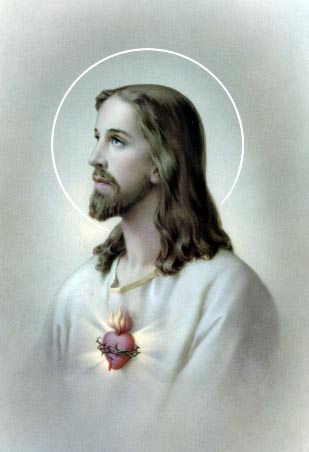
Blessed Feast of the Most Sacred Heart of Jesus!

Friday, June 12, 2015
Happy Feast of the Most Sacred Heart of Jesus

Most Sacred Heart of Jesus, have mercy on us! Make our hearts like unto Thine!
Friday, June 27, 2014
Happy Feast of the Sacred Heart

Behold the Heart that has so loved men! O Jesus, meek and humble of heart, make our hearts like unto Thine!
Friday, June 07, 2013

Friday, June 15, 2012
Happy Feastday!

Thy Heart, O good Jesus, is a precious treasure, a precious pearl which we have found by digging the field of Thy Body. - St. John Eudes
Monday, December 26, 2011
Friday, July 01, 2011
Act of Reparation to the Sacred Heart of Jesus on the Feast of the Sacred Heart

O sweet Jesus, Whose overflowing charity for men is requited by so much forgetfulness, negligence and contempt, behold us prostrate before Thy altar eager to repair by a special act of homage the cruel indifference and injuries, to which Thy loving Heart is everywhere subject.
Mindful alas! that we ourselves have had a share in such great indignities, which we now deplore from the depths of our hearts, we humbly ask Thy pardon and declare our readiness to atone by voluntary expiation not only for our own personal offences, but also for the sins of those, who straying far from the path of salvation, refuse in their obstinate infidelity to follow Thee, their Shepherd and Leader, or, renouncing the vows of their Baptism, have cast off the sweet yoke of Thy law.
We are now resolved to expiate each and every deplorable outrage committed against Thee; we are determined to make amends for the manifold offences against Christian modesty in unbecoming dress and behaviour, for all the foul seductions laid to ensnare the feet of the innocent, for the frequent violation of Sundays and holidays, and the shocking blasphemies uttered against Thee and Thy Saints. We wish also to make amends for the insults to which Thy Vicar on earth and Thy priests are subjected, for the profanation, by conscious neglect or terrible acts of sacrilege, of the very Sacrament of Thy Divine love; and lastly for the public crimes of nations who resist the rights and the teaching authority of the Church which Thou hast founded.
Would, O Divine Jesus, we were able to wash away such abominations with our blood. We now offer, in reparation for these violations of Thy Divine honour, the satisfaction Thou didst once make to Thy eternal Father on the Cross and which Thou dost continue to renew daily on our altars; we offer it in union with the acts of atonement of Thy Virgin Mother and all the Saints and of the pious faithful on earth; and we sincerely promise to make reparation, as far as we can with the help of Thy grace, for all neglect of Thy great love and for the sins we and others have committed in the past. Henceforth we will live a life of unwavering faith, of purity of conduct, of perfect observance of the precepts of the gospel and especially that of charity. We promise to the best of our power to prevent others from offending Thee and to bring as many as possible to follow Thee.
O loving Jesus, through the intercession of the Blessed Virgin Mary our model in reparation, deign to receive the voluntary offering we make of this act of expiation; and by the crowning gift of perseverance keep us faithful unto death in our duty and the allegiance we owe to Thee, so that we may all one day come to that happy home, where Thou with the Father and the Holy Ghost livest and reignest God, world without end. Amen.
Friday, April 15, 2011
"ecclesiastical karaoke"
H/t to WDTPRS:
From CNA:
London, England, Apr 14, 2011 / 05:46 am (CNA).- A Grammy winning music director has delivered a stinging attack upon modern Church music. Joseph Cullen, choral director at the London Symphony Orchestra, says that since the 1960s there has been a “glaring lack of sympathy” for “worthy sacred music.”
Writing in the April 9 edition of the English weekly The Tablet, [?!?] he praised the music used during last year’s papal visit to the United Kingdom. But he added: “Sadly such excellence is untypical of the vast majority of our Catholic churches. There is a glaring lack of sympathy for the heritage which should be the bedrock of worthy sacred music in today’s Church.”
[...]
He writes, “Low-quality material in both inspiration and facility is commonplace. Hymns are set to popular music (for example, “My God Loves Me” to the tune of “Plaisir d’amour”) with little regard to the inappropriateness of the original and well-known words.”
He also criticized the practice of a lone cantor leading the singing in parishes. “The misuse of one booming voice behind a microphone, an ecclesiastical karaoke, seems to have killed off unified congregational singing.”
[...]
Tuesday, July 13, 2010
A Plea to the Fathers of Vatican II, Fall 1963
I just stumbled upon this remarkable document from the Autumn 1963 issue of Caecilia, the predecessor journal to Sacred Music.
What follows is an official petition concerning music in the liturgy. It urges greater focus on the issues at hand, with special concern shown for the propers of the Mass, the training of choirs and priests, the furtherance of the Gregorian ordinary, the discouragement of the then-growing practice of vernacular hymnody at Mass, and limiting (at the start) the extent of vernacular to parish Vespers.
On every point, this document is correct and history bears this out. These were great experts on music here. They knew that vagueness and slogans were not enough to do what needed to be done. Moreover, they were not reactionaries but rather true advocates of the Liturgical Movement: see the plea for the congregation to be encouraged to share in the singing at Mass, but not at the expense of the structure of the service. This is not a call to preserve the status quo (see even the criticism of the 1958 decree on music) but rather a plea for a more solid framework for progress in the future.
I'm particularly struck by #4 and the suggestion that a sung Mass be made possible within the Low Mass, to be handled by a Cantor alone. This of course is the most common Mass structure we see today but it also most commonly lacks propers of the Mass. It's as if the worst of the old (four vernacular hymns) ended up by default combining with the worst of new to create this modern hybrid we know so well.
One senses a profound worry at the heart of this document that if the Council was not specific enough, disaster could befall the music of the Mass. Would that the Caecilian's plea been heeded!
The Constitution on the Sacred Liturgy, passed later this very year, did not necessarily contradict anything in this petition, and it even gave a ringing endorsement of Gregorian chant, but it lacked the specificity and failed to correct for the abuses which the Caecilians anticipated.
Note finally that two years later, Pope Paul VI called for the successor organization to the Society to be given a leadership role in guided the development of music following the Council. (It goes without saying that this wish was not fulfilled.)
Everyone who sniffs at the stuffiness of the old Society of St. Caecilia ought to consider the foresight revealed in this petition. It is time that history acknowledge who was right.
The American Society of St. Caecilia respectfully submits to the consideration of their Eminences and their Excellencies, the Most Reverend Fathers of the Second Vatican Council, the following petitions.
1. Regarding the place of music in the liturgy:
In view of the fact that the church has always regarded the function of the cantor and the trained choir, as well as that of the singing congregation, as an integral and necessary element of public worship, this Society is sincerely hopeful that the Fathers of the Council, before making any changes which might affect the structure of the services, will give earnest consideration to the importance of these traditional elements. While this tradition is not founded upon recent documents, we should desire the retention of the principles so clearly outlined in Pope St. Pius X's Motu Proprio and in the Musicae Sacrae Disciplina of Pope Pius XII.
2. Regarding the Propers of the Sung Mass:
If any changes are to be made in the structure of the Proper of the Mass, this Society respectfully urges that the Fathers of the Council give careful thought to the fundamental structure of the service, and therefore to the meaning and value of each part, clearly preserving the roles of the cantor and trained choir. This Society also begs that art and beauty, which are inherent and not foreign to the casting of the Proper parts, not be sacrificed to the single issue of simplicity and brevity.
3. Regarding the Ordinary of the Sung Mass:
Since the necessity of a clearer insight into what worship really is presses for a greater sharing by the people in the song of the Church, this Society earnestly recommends that the congregation be encouraged to share in the singing at Mass, not necessarily according to the medieval and mistaken norm of the Ordinary as a unit, but with due regard for the place the various chants have in the fundamental structure of the service. It therefore also pleads that the great treasures of medieval chant and classical polyphony, as well as the riches of modern and contemporary music, not be discarded on the untraditional plea that there is no place for participation by listening.
4. Regarding the music at Low Mass:
This Society respectfully urges that consideration be given to maintaining the sung mass as the norm for congregational service, and where necessity demands, that provision be made for a simplified form of sung Mass that requires only the service of a trained cantor to supplement the singing of the congregation. The singing of hymns at low Mass, a solution suggested by the 1958 decree, is not completely satisfactory, because it remains extraneous to the action at the altar.
5. Regarding the use of the vernacular in the sung liturgy:
The Society of St. Caecilia recognizes that the vernacular problem is a pastoral problem, but even more basically a problem involving the proper attitude toward worship. Because music is an integral part of worship, the problem is necessarily also a musical one. This Society therefore urges care and caution, since the musical problems involved are certainly very great, whether in creating a new music for a vernacular text or in adapting a vernacular text to the rich store of chant and polyphony and other music from the past. The Society especially suggests vernacular adaptations to the offices of the church which have fallen into disuse, notably parish Vespers.
6. Regarding the practical realization of a sung liturgy:
The Society of St. Caecilia urges the Fathers of the Council to implement the repeated wishes of the Holy. See by encouraging the musical training of both clergy and laity, and especially of choirmasters and organists, according to the norms laid down in the decree of the Sacred Congregation of Rites of September 3, 1958, so that the ideals of a reverential and artistic musical worship may be realized.
The above articles have been approved by the Most Reverend Gerald T. Bergan, Archbishop of Omaha, the. Liturgy and Music Commissions of the Archdiocese of Omaha, and by the Boys Town Liturgical Music Institute's eleventh national session.
For the Society of St. Caecilia:
September 12, 1963
Msgr. Francis P. Schmitt, President
Rev. Francis A. Brunner, C.Ss.R., Secretary
James P. Keenan, Treasurer
Thursday, May 06, 2010
Wednesday, April 28, 2010
The Splendour of Worship
 People, no doubt, wonder why such fuss is made over extravagant vestments and claim that it's


 all pomp and circumstance feeding the ego of the ministers. Then there's the usual rant about the poor, how the excessive show of triumphalism is contrary to the heart of Jesus who loved the poor and dispossessed.
This is all true, that Jesus has particular care of the poor and the dispossesed. But really, it is all of us who are poor and dispossessed. We are poor because without God, we are nothing, we have nothing. We do not bring ourselves into existence and neither can we exist without God, however much atheists protest and try to prove this point. We become less human when God is pushed out of the picture. So, yes, all of us are poor. Jesus' Incarnation, His emptying Himself of glory to take on our human nature teaches us this very point. For our sakes, He became poor. We are the poor.
And we are dispossessed. Our sin deprived us of our heritage, that of beholding God face to face. And it is only through Christ that we are able, by adoption through Him in his Passion, Death, and Resurrection, that we are restored to that heritage, that we are sons and daughters of the Most High.
What does this have to do with worship, and vestments, and "pomp".
The Pontifical Solemn High Mass last Saturday reminded me once more that God is utterly Other. However much I want to bring Him down to my level, yet He is God, truly adorable and worthy of all the best that I can offer Him through worship. The vestments, the rituals, the gestures bear within them the symbol that God is beyond me. And yet, through the Sacrifice of the Mass, I am drawn into the heart of the Divine.
What was so stunning about the cappa magna that Bishop Slattery was dressed in as he entered the temple, evoked Isaiah: "In the year that King Ozias died, I saw the Lord sitting upon a throne, high and elevated; and His train filled the temple."
Isaiah was given this vision of the splendour and the glory of God.And now, through Christ's Passion, Death, Resurrection, and Ascension, we--foolish and weak that we are, unfaithful and forever wandering away--can know, can glimpse, can be pierced, too, by the glory of God. It is splendid. It is glorious. It is not like us. And we fall down to our faces and say, "Woe is me for I am a man of unclean lips, and I dwell among a people of unclean lips and I have seen with my eyes the King, the Lord of Hosts."
And just like the priest prays before the declaration of the Gospel, "Munda cor meum ac labia mea,omnipotens Dei..." Cleanse my heart and lips. We are once more drawn into that temple where we come to face Truth, Holy, Transcendent, Merciful and Glorious.
Unlike the modern manifestations of the liturgy which pull our attention away from God to fall upon ourselves and our actions and our relevance, this most solemn of rites makes us lift our eyes heavenward, the destiny of our journey. Not by anything that we do, but only through the Offering of Christ in Himself. For our part, it is the offering we give of our heart, our prayer, our whole attention that are required of us. It isn't whether we verbally say things out loud: words are meaningless if we do not have recollection, remembering who we are and who God is, that is, pardon the pun, at the heart of worship.
The infernal and maddening battles over liturgy and whether modern man can rightly understand the words of worship detract from what it is that is being done, who it is that is acting at Mass. We are spectators, you and I, in this grand drama of salvation. It is Mystery that our minds can hardly penetrate. This leaves little room for silly dancing, hand-holding, comedic actions that have nothing to do with the sacred actions happening at Mass. It is Mystery and we are left in awe.
I can understand why liturgical wars are so intense. It is a matter of who is at the heart of the Mass. We feel useless when we aren't "doing anything". Why is it only the priest that gets to do things? Aren't we, all of us, priests in that royal priesthood of believers?
But it is Christ who is the Priest, the only one who can offer a worthy offering to God the Father. And so when the cappa magna passes by, when that sacred minister, with his face set in a solemn way, passes by and his shimmering long train follows, our hearts are lifted because, here, in this person, in this temple, in this hour, Christ enters. This is our Catholic Faith. Through sensible signs, the Divine enters. How blessed are we to witness it and at the end, when we are dismissed, it is our turn to walk in this world bearing this light, this Divine Truth, God is in His temple, let the earth worship.
Source: Argent by the Tiber
Sunday, March 28, 2010
Offertory & communion motets in preparation for Easter
Mozart's "Jubilate Deo" a capella:
Mozart's "Jubilate Deo" with organ accompaniment:
Byrd's "Ave Verum":
Mozart's "Jubilate Deo" with organ accompaniment:
Byrd's "Ave Verum":
Sunday, November 22, 2009
Hassler's Cantate Domino
This is what we wanted to achieve. Unfortunately, we are still far, far away from this. So, practice, practice, practice!
Monday, October 12, 2009
A Loss of High Art
FOR SIXTY-ONE YEARS, radio station KFUO has been broadcasting classical music in Saint Louis. This past week, its owner — the Lutheran Church Missouri Synod — sold the station to Gateway Creative Broadcasting, who will change its format to contemporary Christian praise and worship music, starting next year.
Those who are devoted to the high-art Western music tradition are dismayed that the city's sole remaining broadcast classical music station is going off the air. Classical music groups and venues are also worried, since KFUO was their major advertising forum, leading to the majority of their ticket sales. I listen to KFUO when I am in my car; its local and free content makes it potentially more interesting for Saint Louisians than many of its media alternatives, such as satellite radio or Internet sources, which will often broadcast only music with no commentary.
Classical music was one of the topics of my second posting on this blog, High art or low? from December 2004. With the sale of this radio station, its music will shift from high to low art.
The most important things ought to be done with the highest and best art, and as the Holy Sacrifice of the Mass is the pinnacle of Man's life here on earth, the art associated with the Mass ought to be the best and highest. And so the Mass, through its musical settings, forms the core of the Western classical music tradition as its source, and is where the best of that tradition ought to return.
Of all the theories of art proposed, the virtue theory of art, coming from the Greek philosophical tradition through the Church, has the greatest explanatory power, and is universal: modern art theories are at best subsets. This provides a framework for judging artists and their work. According to this theory, the artist has in-born ability towards this virtue, intellectually understands this virtue via education, and builds upon and expresses this virtue through practice and from feedback from other artists who have perfected this virtue. The virtuous artist must master his tools and reliably make what he intends (or for the apprentice artist, what he is directed) beforehand. The artist also has to be open to divine inspiration. The virtuous artist makes his art a part of himself, he enjoys making his art, and the making of his art appears graceful and effortless. As this theory is not tied to culture, nor does it limit itself to merely non-utilitarian aesthetic works of art, it is applicable to all the various works of humans in all manner of places and times. Thusly we can judge the making of art objectively outside of the realm of personal preference. Classical music is very greatly a matter of artistic virtue as outlined here.
Good art is simultaneously true, artfully executed, and provides a lively response from its audience; the deficit of any of these three characteristics can indeed be judged negatively, and this judgement can and ought to be done using the full range of objective, subjective, and relative factors. That this framework has Trinitarian overtones is no accident, as we are made in the image and likeness of God, and is related to the three transcendental values of truth, goodness, and beauty.
Art can be judged as being closer to the high or low ends of the artistic spectrum depending on the transcendental factors and the virtue of art described above. While it is fitting that high art ought to be used for important occasions: the Mass, formal celebrations of a community, inaugurations or coronations of leaders, and such forth, most art will necessary be of the lower varieties. For example, a play put on by young children may have little appeal outside of their friends and family, but it will nonetheless have great value within that narrow circle: but still, it is not unreasonable to suggest that this play ought to be done as well as possible within the circumstances available.
“If a thing is worth doing, it is worth doing badly,” wrote G.K. Chesterton. So true: a badly prepared meal is better than no meal at all if you are very hungry and have no alternatives. But the intent of making a poorly made meal shows a contempt for the eaters. This can lead to a reductionistic morality that excludes the feelings of others. Sadly, the decline of listenership to classical music seems to be due partially to apparent contempt for its listeners, with the introduction of unlistenable atonal works, as well as an elitist attitude that would often exclude the living, contemporary, and very popular works that are nowadays found in the best music for film and stage.
KFUO is criticized within its owner's ecclesial body as not being much of an instrument of evangelization, although it operates at a profit, which in turn is used for preaching the Gospel. But certainly the new owners of the radio station intend to make it explicitly evangelical, in preaching the Gospel through song in a way that is open to casual listeners.
Much of classical music is the Latin liturgy of the Church, some of which is broadcast on this radio station. But certainly the Latin texts of the Mass are lost on those who do not follow along in the Missal, particularly when divorced from its natural setting within the liturgy. The change of liturgical texts from Latin to the vernacular languages was done specifically for an evangelical purpose. However, even if a listener of sacred music fails to grasp the intellectual aspect of the music, he still may appreciate the technical ability of the musicians and feel his soul being pulled upwards, giving even untranslated music of the Latin liturgy power. On the contrary, much sacred music in the vernacular, although intellectually understandable, often is not artfully done, nor does it often inspire a lively uplifting response in the listener. Also, the vernacular texts are often poorly translated and hymns sometimes have questionable content. Certainly the use of classical music and the traditional Latin liturgy is somewhat of a challenge to worshippers: but active participation requires a certain preparation and intellectual understanding on the part of the congregation, in other words, the people have to do their part.
The apparent opposition between non-evangelizing high art of classical music and the explicitly evangelical content of low-art praise and worship music, as shown with KFUO, is false. High art, including the sacred core of the canon of classical music ought to be placed back into its natural environment of the liturgy of the Church, and ought to become a source of inspiration of new works within this living tradition. Popular devotion has been greatly reduced within the Church, but a recovery of this practice will mean that there is a greater opportunity for lower art to thrive. As Protestant worship tends to be entirely popular devotion, we shouldn't be surprised that they have an abundance of popular arts.
One strange thing I noticed about KFUO was how much of its advertising was explicitly Catholic, from ads run by various religious orders to Mass announcements from my parish, Saint Francis de Sales Oratory. In times such as these, you have to know who your friends are. I cannot imagine that the new owners of the station would care to run such advertisements, nor would the station's listeners care to hear them.
Source: Rome of the West
Saturday, September 12, 2009
Singing as a responsibility
Dr. Jeffrey Tucker hit it on the nail again (double or triple whammy, I may say) with the state of singing in most Catholic parishes:
"There's also been a terrible price to pay in terms of people's level of dedication to the task. Catholics are under the impression that the music at Mass just happens. Pastors are unwilling to pay for it, and the people themselves are unwilling to make anything like a serious commitment to making it happen. As a result, most parishes have a hard-core group of a few people, perhaps 2 to 4 people, who make it all happen, while everyone else involved comes and goes depending.
In fact, as a person with a childhood spent in the Baptist Church, I'm astonished at the lack of service ethic in the Catholic Church regarding music. In the Baptist Church of old (I don't know if this is still true), if you could sing, you sang. Period. There was no choice about it. If you were a member with some musical talent, it was a tithe to sing in the choir. It was something you did simply because you were a member. If a true singer were sitting in the pews instead of the loft, he or she was considered a shirker and a bum.
So it was and so it should be, in my view. The contrast with the Catholic Church today is striking. In Catholic parishes, people will sing only under certain conditions: 1) if they have some talent and are not embarrassed to sing, 2) if there is nothing else going on the evening of rehearsal, 3) if the singers are praised to the skies by the director and the pastor, 4) if they are willing to come to Mass every week, 5) if they are willing to sit apart from their family, 6) if the music is something they like to sing, 7) if they like the other choir members and have unrelenting fun during every minute of participation, 8) if the singer in question is given a big solo, and so on.
In other words, many people are sitting on the fence waiting to find out what the choir will do for them rather than what their participation will do for the parish. This is an egregious attitude, one that stands completely contrary to a service ethic. It is like saying to God: "I know you gave me a certain ability but I will only use it under the conditions that I name, and otherwise I will not use my talent to serve people and serve you, simply because my own personal pleasure and well being comes before any obligation I owe to anyone, including God." I would go so far as to say that, other things equal, it may be a sin for those who can sing not to sing.
And yet this ethic is nowhere to be found in the Catholic Church today. People assume the posture of consumers of liturgy. They show up and take it all in, and complain about it as they see fit, without a moment's thought put into what he or she can personally do to make a difference."
Read the entire article here.
Tuesday, September 08, 2009
Mapping Gregorian pitches to keyboard
Dr Jeffrey Tucker over at the NLM highlighted a Mac program helpful for people to map Gregorian pitches to piano.
Mac program made by Ben George.
Pope Benedict Asks For Greater Composure in the Liturgy
From the NLM:
Last Sunday, the Holy Father visited the Italian cities of Viterbo with its papal palace, where the first papal conclave was held, and Bagnoregio, birthplace of St Bonaventure, about whom Pope Benedict wrote his habilitation treatise (which is being published these days, for the first time in its original version, as the second volume of his opera omnia). In Viterbo, he celebrated Mass in the Faul Valley, immediately below the walls of the papal palace. According to several reports in the Italian press (cf. here, here or here), at lunch that day with the local bishops, the Holy Father made some interesting remarks about the attitude of the faithful attending that Mass. While they are not new or surprising, they certainly bear highlighting. According to the reports, Benedict XVI explained to the bishops present that "he desires a greater composure in the liturgies, in which, he finds, applause and acclamations are out of place." In that sense he commended Sunday's celebration, because the more than ten thousand faithful attending "were very devout and composed." In this, the faithful also followed an invitation made through the speakers installed for the occasion "not to applaud and to remain recollected."
Friday, September 04, 2009
It's a Still Life That Runs Deep
Morten Lauridsen explains how this Zurbarán painting, filled with religious symbolism, inspired him to compose his "O Magnum Mysterium".
Read more here.
In the meantime, enjoy this world-famous composition by Lauridsen performed by the Nordic Chamber Choir:
Read more here.
In the meantime, enjoy this world-famous composition by Lauridsen performed by the Nordic Chamber Choir:
Tuesday, August 18, 2009
Friday, June 19, 2009
Subscribe to:
Posts (Atom)