Tuesday, August 18, 2009

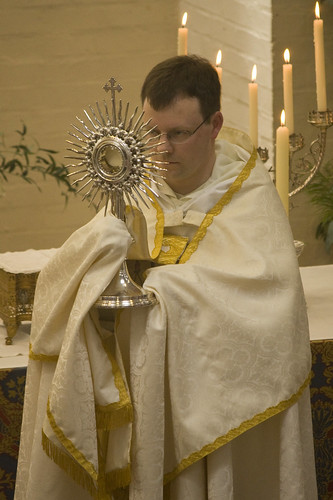
Blessing of the new St Pius X Priory

Here are some news from nearby Singapore:

The Sacrament of Confirmation will be administered by Bishop Fellay next Saturday, 22 August.

The following is the programme of 22 and 23 August., when Bishop Fellay is in Singapore:

22 August, Saturday
9.30 a.m.: Blessing of the Chapel; Confirmation; Solemn High Mass

23 August, Sunday
8 a.m.: Pontifical Low Mass
10 a.m.: Silver Jubilee Solemn High Mass of Father Couture
Afternoon: Potluck; Conference by His Lordship (Sentosa Golf Course)

St. Pius X Priory, 286 Upper Thomson Road, Singapore.

Photos stolen from Kenny's Facebook:


Grieg's Ave Maris Stella

Monday, August 17, 2009

Thirteenth Sunday after Pentecost

For August 30, 2009 which is the 13th Sunday after Pentecost, we are going to sing:
  1. Procession: Come, Thou Holy Spirit, Come
  2. Asperges me
  3. Introit: Respice, Domine
  4. Kyrie IX (Cum Iubilo)
  5. Gloria IX
  6. Gradual: Respice, Domine
  7. Alleluia: Domine, refugium
  8. Credo I
  9. Offertory: In te speravi
  10. Offertory hymn: Ave Maris Stella
  11. Sanctus IX
  12. Agnus Dei IX
  13. Communion hymn: O Salutaris Hostia XI
  14. Communion: Panem de caelo
  15. Recession: Heart Of Mary
Click on the links to hear samples where available.

Tuesday, July 28, 2009

Tenth Sunday after Pentecost

For August 9, 2009 which is the 10th Sunday after Pentecost, we are going to sing:
  1. Procession: Praise To The Holiest
  2. Asperges me
  3. Introit: Dum clamarem
  4. Kyrie IX (Cum Iubilo)
  5. Gloria IX
  6. Gradual: Custodi me, Domine
  7. Alleluia: Te decet hymnus
  8. Credo IV
  9. Offertory: Ad te, Domine, levavi
  10. Offertory hymn: O Sanctissima
  11. Sanctus IX
  12. Agnus Dei IX
  13. Communion hymn: Cor Jesu, Caritatis Victima
  14. Communion: Acceptabis
  15. Recession: Immaculate Mary (Lourdes refrain)
Click on the links to hear samples where available.

Sunday, July 12, 2009

Eighth Sunday after Pentecost

For July 26, 2009 which is the 8th Sunday after Pentecost, we are going to sing:
  1. Procession: Hail, Jesus, Hail
  2. Asperges me
  3. Introit: Suscepimus
  4. Kyrie XI
  5. Gloria XI
  6. Gradual: Esto mihi
  7. Alleluia: Magnus Dominus
  8. Credo I
  9. Offertory: Populum humilem
  10. Offertory hymn: Jesu, rex admirabilis (G.P. da Palestrina)
  11. Sanctus XI
  12. Agnus Dei XI
  13. Communion hymn: Adoramus Te Christe
  14. Communion: Gustate et videte
  15. Recession: Jesus, My Lord, My God, My All
Click on the links to hear samples where available.

Saturday, July 11, 2009

Reparation for Sacrilege!

Let us hasten to make reparation for this most grievous offense against the Most Blessed Sacrament of the Altar which happened right here in Malaysia.

Act of Adoration & Reparation to Jesus in the Most Blessed Sacrament

Profoundly I adore Thee, my Jesus,
true Victim of expiation for our sins,
and I offer Thee this act of adoration
to atone for the sacrilegious outrages
Thou dost suffer from so many ungrateful Christians
who dare to draw near to receive Thee
with mortal sin upon their souls.
In reparation for such hateful sacrileges
I offer Thee the last drops of Thy Most Precious Blood,
which Thou didst shed from Thy sacred wounds
and especially from the wound in Thy sacred Side,
and entering therein with a devout heart,
I adore Thee,
I bless and I love Thee,
and I repeat with all the hearts
who are devoted to the Blessed Sacrament:

O Sacrament most holy!
O Sacrament divine!
All praise and all thanksgiving
be every moment Thine.

Our Father...
Hail Mary...
Glory Be...

Monday, June 29, 2009

Alas! And Did My Saviour Bleed

Yours truly found the following video by sheer coincidence while planning for hymns for the next Mass (6th Sunday after Pentecost) which falls in July, the month traditionally commemorating the Most Precious Blood of Our Lord. Simple, yet elegant tune, recalling the heavy price paid for our sins.

Alas! and did my Saviour bleed
And did my Sovereign die?
Would He devote that sacred head
For sinners such as I?

Thy body slain, sweet Jesus, Thine—
And bathed in its own blood—
While the firm mark of wrath divine,
His Soul in anguish stood.

Was it for crimes that I had done
He groaned upon the tree?
Amazing pity! grace unknown!
And love beyond degree!

Well might the sun in darkness hide
And shut his glories in,
When Christ, the mighty Maker died,
For man the creature’s sin.

Thus might I hide my blushing face
While His dear cross appears,
Dissolve my heart in thankfulness,
And melt my eyes to tears.

But drops of grief can ne’er repay
The debt of love I owe:
Here, Lord, I give my self away
’Tis all that I can do.

Sunday, June 28, 2009

Sixth Sunday after Pentecost

For July 12, 2009 which is the 6th Sunday after Pentecost, we are going to sing:
  1. Procession: Alas! And Did My Saviour Bleed (tune: Martyrdom)
  2. Asperges me
  3. Introit: Dominus fortitudo plebis suae
  4. Kyrie XI (Orbis Factor)
  5. Gloria XI
  6. Gradual: Convertere, Domine
  7. Alleluia: In te, Domine, speravi
  8. Credo III
  9. Offertory: Perfice gressus meos
  10. Offertory hymn: Sub Tuum Praesidium (plainsong)
  11. Sanctus XI
  12. Agnus Dei XI
  13. Communion hymn: O Sacrum Convivium (plainsong)
  14. Communion: Circuibo
  15. Recession: To Jesus Christ, Our Sov'reign King
Click on the links to hear samples where available.

Saturday, June 20, 2009

Fourth Sunday after Pentecost

For June 28, 2009 which is the 4th Sunday after Pentecost, we are going to sing:
  1. Procession: O Jesus, In Thy Heart Divine
  2. Asperges me
  3. Introit: Dominus illuminatio mea
  4. Kyrie XI
  5. Gloria XI
  6. Gradual: Propitius esto
  7. Alleluia: Deus, qui sedes
  8. Credo I
  9. Offertory: Illumina oculos meos
  10. Offertory hymn: Ave Maria (J. Arcadelt)
  11. Sanctus XI
  12. Agnus Dei XI
  13. Communion hymn: Adoro te, o panis caelice (P. Piel)
  14. Communion: Dominus firmamentum meum
  15. Recession: Firmly I Believe And Truly (tune: Halton Holgate)
Click on the links to hear samples where available.

Friday, June 19, 2009

Happy Feast of the Sacred Heart


O Jesus, meek and humble of heart, make our hearts like unto Thine!

Saturday, May 30, 2009

Veni Sancte Spiritus

Come Holy Ghost, protect and guide the Church!
DescentOftheHolyGhost Pictures, Images and Photos

Friday, May 29, 2009

Friday, May 22, 2009

Organ Installation

Amazing video showing the installation of a church organ.

Sunday, May 10, 2009

Wedding music

Matthew from Shrine of the Holy Whapping posted the following article:

A Friend Writes: In Re Wedding Music, and Some Thoughts on 'Traditionalesque' Customs

One of our readers asks us the musical question:

Now that we are fast approaching June and wedding season, the question of authentically Catholic wedding planning music and the liturgical norms for such celebrations are more and more poignant. [I appreciate his diplomatic tone.--MGA]

A number of secular songs have become popular over the years, including Bridal Chorus from Wagner's Lohengin ("Here Comes the Bride") and the recessional Wedding March from Mendelssohn's Midsummer Night's Dream. These songs made their ascendancy after their use at the Princess (soon to be Queen) Victoria. While popular, their use in a Catholic ceremony is not appropriate.

Hymns are clearly more appropriate, but is it better to forego the singing and have the organist play the melody?

Finally, should the priest and groom's party process, and should different music should be played when the bridge processes?

Clarity and guidance is sought regarding these issues.
One very fine wedding I attended at the Madeleine in Salt Lake had their very fine choir sing the Introit in Latin for the nuptial mass as the procession entered. This is, of course, a very fine solution, though it is not always possible due to pastoral politics or resources.

This also brings up the difficult questions of whether bride and groom should enter together, before or after the priest in procession, as they are the ministers of the sacrament, and if the ancient if somewhat sacramentally peculiar custom of the father giving the bride away is appropriate in the present context.

I believe the practice is a Christianization of the elaborate contractual rites of the various Nordic peoples who received the Faith in the period after Rome's fall and is thus a somewhat alien addition to our predominantly Mediterranean liturgical roots, though its antiquity does also give it a certain merit as well. Of course, in such instances, discretion is called for, given weddings are nearly always emotional powder kegs.

I would like to put a word in for another custom I saw at a Tridentine wedding once; the bride's veil was kept down for most of the ceremony, and the first kiss of bride and groom was delayed until the Pax of the mass. The priest used the missal as a Pax-brede, kissed the cross at the front of the Canon, handed it to the groom to kiss, and then the groom raised his bride's veil and kissed her, a wonderful fusion of sacramental hierarchy and complementarity. The veil remained folded back until the end of mass. I do not know if it is medieval, but it certainly sounds like something a medieval mind could love. As a practical matter, it is important to make sure the veil is not too thick as the bride told me afterwards that while she looked quite picturesque under all that, she quickly discovered the polyester veil didn't breathe very well, and unfortunately neither did she.

One general difficulty with discussing this subject is so many of our wedding traditions are what Rebecca Mead, author of One Perfect Day: The Selling of the American Wedding calls "traditionalesque." (Thanks to Whapster Dan for pointing out this helpful verbal coinage.) In other words, they're largely new and made-up, without any footing in organic tradition.

The traditionalesque is the vaguely nostalgic, the instantly-invented traditions that so frequently define the modern wedding industry. Even the Wedding March from Lohengrin is fairly antique compared to some of these newly-minted age-old customs. (The unity candle would seem to be a glaring example of this.) Yet, perhaps it is best not to pry too deeply into such matters, given there is so little tradition lying around today already. White wedding dresses may go only as far back as Queen Victoria, and tuxedos and morning dress tailcoats even less. It appears diamond rings went into the mainstream as engagement gifts because of De Beers.

But it's what we're used to, and still remain potent symbols in an age devoid of symbolism. And white dresses do symbolize purity, and have for ages, no matter what hand Victoria Regina had in connecting them with weddings. (And as a bit of a pageantry groupie, I do have to admit where else are you going to see a girl wandering around with a fifteen-foot train and men in top hats? I take what I can get, where I can get it.)

As much as I'd like us to dispose ourselves like Sarum-rite groomsmen or grave Spanish courtiers of the seventeenth century, I realize such antiquarianism is not a going concern. Of course, this does not mean we have to tolerate unity candles and other much more glaringly faux accretions.

I would, however, love someday to get to the root of what Catholic weddings looked like in ages past, and cut past the myths and mystery. Though I'm not sure I'll tell any prospective brides what I find. I value my life too much for that.

Saturday, May 02, 2009

Choral Treasure

If any of you regulars have not heard about the on-line radio station called Choral Treasure, well it's time you should. They broadcast, practically non-stop, the Church's great treasury of choral music. They now are scheduled to close at the end of the month, because they have to pay royalties and are running out of money.

It is such a shame that this wonderful treasure is about to close. If any of you have money to spare right now, you might consider going to their site and making a contribution via Paypal.

Friday, May 01, 2009

Rosary Crusade


A ROSARY CRUSADE
for the Consecration of Russia to
the Immaculate Heart of Mary.
(May 1, 2009 to March 25, 2010)

“Let us offer her by March 25, 2010 a bouquet of 12 million
Rosaries, like a crown of 12 million stars all around her, to be
accompanied by a similar quantity of daily sacrifices to be
drawn above all from the faithful accomplishment of our
duty of state, while we promise to spread the devotion to
her Immaculate Heart.”

+ Bernard Fellay
Winona, 15 April 2009

The Intention:
For the Consecration of Russia to Her Immaculate Heart.

Please fill up the card and drop in the special Rosary Crusade Box
at the end of each month.
Every person of good will is invited to join this Rosary Crusade,
whether or not, he/she frequents our SSPX masses.

Wednesday, April 29, 2009

Sacred Triduum photos

As promised here are the photos from the Sacred Triduum this year. Click on the photos for the bigger image.

Maundy Thursday


Good Friday


Easter Vigil


Monday, April 27, 2009

Sacred Triduum videos

Here are some videos captured during the ceremonies of Holy Week and the Sacred Triduum.

Washing of feet during Maundy Thursday.

Stripping of altar with the psalm Diviserunt on Maundy Thursday.

Gloria and ringing of bells during the Paschal Vigil Liturgy.

Consecration during the Paschal Vigil Liturgy.

Sorry, but I couldn't get any videos for the Solemn Good Friday Liturgy. More pictures coming soon.

Saturday, April 18, 2009

Singing Satan's Parts?

Interesting article from Boniface on some new developments in Novus Ordo land. Disturbing, to say the least.

Thursday, April 16, 2009

Second Sunday after Easter

For April 26, 2009 which is the Second Sunday after Easter, we are going to sing:
  1. Procession: Hail, True Victim, Life And Light
  2. Vidi aquam
  3. Introit: Misericordia Domini
  4. Kyrie I
  5. Gloria I
  6. Alleluia: Cognoverunt discipuli
  7. Alleluia: Ego sum pastor bonus
  8. Credo III
  9. Offertory: Deus, Deus meus
  10. Offertory hymn: Surrexit Christus Dominus (M. Praetorius)
  11. Sanctus I
  12. Agnus Dei I
  13. Communion hymn: Cor Jesu, Caritatis Victima
  14. Communion: Ego sum pastor bonus
  15. Recession: Regina Caeli, Jubila
Click on the links to hear samples where available.

Monday, March 30, 2009

Resurrection of Our Lord & Saviour Jesus Christ (the Solemnity of Solemnities)

For April 12, 2009 which is the Resurrection of OLJC, we are going to sing:
  1. Procession: Lift Thy Voice Rejoicing, Mary
  2. Vidi aquam
  3. Introit: Resurrexi
  4. Kyrie I
  5. Gloria I
  6. Gradual: Haec dies
  7. Alleluia: Pascha nostrum
  8. Sequence: Victimae paschali laudes
  9. Credo IV
  10. Offertory: Terra tremuit
  11. Offertory hymn: Regina Caeli, Jubila
  12. Sanctus I
  13. Agnus Dei I
  14. Communion hymn: Adoro Te Devote
  15. Communion: Pascha nostrum
  16. Recession: Jesus Christ Is Risen Today (SBH#044)
Click on the links to hear samples where available.

Monday, March 23, 2009

Paschal Vigil

For April 11, 2009 which is the Paschal Vigil, we are going to sing:
  1. Canticle: Cantemus Domino
  2. Canticle: Vinea facta est
  3. Canticle: Attende caelum
  4. Litany of the Saints (until "Omnes Sancti et Sanctae Dei, intercedite pro nobis")
  5. Canticle: Sicut cervus
  6. Litany of the Saints (cont. from "Propitius esto, parce nobis Domine")
  7. Kyrie I
  8. Gloria I
  9. Alleluia: Confitemini Domino
  10. Tract: Laudate Dominum
  11. Sanctus I
  12. Offertory hymn: Regina Caeli (A. Lotti)
  13. Communion hymn: O Quam Amabilis (G.P. da Palestrina)
  14. Communion: Alleluia (repeat after the end of Laudate Dominum)
  15. Antiphon: Et valde mane
  16. Canticle: Benedictus Dominus (repeat Antiphon Et valde mane at the end)
  17. Recession: Lift Thy Voice Rejoicing, Mary
Click on the links to hear samples where available. NOTE: The Credo and Agnus Dei are not sung/said in the Paschal Vigil Mass.

Good Friday

For April 10, 2009 which is Good Friday, we are going to sing the following:
  1. Responsorium I: Domine audivi
  2. Responsorium II: Eripe me, Domine
  3. Responses to Ecce lignum Crucis in ascending tone: Venite adoremus (1) (2) (3)
  4. Improperia: Popule meus (during solemn adoration of the Cross)
  5. Antiphon: Crucem tuam (during solemn adoration of the Cross)
  6. Hymn: Crux fidelis (during solemn adoration of the Cross)
  7. Antiphon I: Adoramus te Christe (when the Blessed Sacrament is returned to the altar)
  8. Antiphon II: Per lignum (when the Blessed Sacrament is returned to the altar)
  9. Antiphon III: Salvator mundi, salva nos (when the Blessed Sacrament is returned to the altar)
  10. Communion: Psalm 21
Click on the links to hear samples where available.

Maundy Thursday

For April 9, 2009 which is Maundy Thursday, we are going to sing:
  1. Procession: Blessed Lamb
  2. Introit: Nos autem gloriari
  3. Kyrie IV
  4. Gloria IV
  5. Gradual: Christus factus est
  6. Antiphon: Mandatum novum (antiphons 6-13 are sung only if feet washing rite takes place)
  7. Antiphon: Postquam surrexit Dominus
  8. Antiphon: Dominus Iesus
  9. Antiphon: Domine, tu mihi lavas pedes
  10. Antiphon: Si ego Dominus
  11. Antiphon: In hoc cognoscent omnes
  12. Antiphon: Maneant in vobis
  13. Antiphon: Ubi caritas
  14. Offertory: Dextera Domini
  15. Offertory hymn: Quis Sicut Te
  16. Sanctus IV
  17. Agnus Dei IV (end with "miserere nobis" instead of "dona nobis pacem")
  18. Communion hymn: O Bone Jesu (M.A. Ingegneri)
  19. Communion: Dominus Iesus
During translation of the Most Blessed Sacrament to the altar of repose:
  1. Hymn: Pange lingua gloriosi
During stripping of the altar:
  1. Antiphon: Diviserunt and Psalm 21 (Deus, Deus meus)
Click on the links to hear samples where available.

Wednesday, March 18, 2009

10,000 Scores at CPDL

by Jeffrey Tucker

Last month, the number of choral scores available at the Choral Public Domain Library passed the 10,000 mark. This is a massive music library, and a spectacular one not only for its price ($0) but also for the huge range available that does not exclude the very music named by the Second Vatican Council as proper to liturgy.

The polyphonic tradition of the Renaissance had fallen out of use in the 1970s but as you look back further to evidence from preconciliar times, back to early in the 20th century, and the 19th century too, you see scant evidence of a broad use of the best music of the 16th century.

This might have been due to the relative difficulty of obtaining it. I can recall the days before CPDL and scouring the library's collected works volumes for these pieces and feeling overwhelmed and lost, and once having found a piece, looking to purchase it and having terrible trouble getting from here to there. Cathedral musicians might have had the resources and ability to seek and obtain, but not regular parishes.

Today, all is changed. I am not surprised that there is a whispering campaign against CPDL, given the number of entrenched commercial interests that it threatens. We are told that the editions are riddled with errors (exaggeration, and, in any case, with digital publishing, errors can be reported and fixed), that the music is actually illegal (ridiculous, and if there are plaintiffs with standing, let them come forward now), and that it will drive established Catholic music publishers out of business.

Let me address that last point. I don't doubt that its existence portends a dramatic upheaval in liturgical music publishing in the next few years. It was about 40 years ago that the industry went through another upheaval, with older companies dying and new publishers appearing. It was an astonishing thing to behold. Some companies made the transition, however, by adjusting to new realities. You know their names.

So it is today. There will be adjustments made all around. Rather than seethe and smear, the companies that are grousing about CPDL might consider adjusting their business model. Otherwise, they will find themselves like the newspaper industry today, which is melting into oblivion. I don't pretend to know what the future of music distribution is but we can be pretty certain that it will be different from the past.

Catholic parishes are famously unwilling to devote resources to their music programs, at least as compared with other Christian houses of worship. In particular, parishes have been unwilling to pay musicians. This is not just a bad habit; it is an entrenched feature of Catholic life and has been for a very long time.

Just the other day, I was reading a music catechism from 1936 that came close to anathematizing the payment of musicians in parishes, since their reward will be in heaven. Somehow the rule has not been so dogmatically applied to architects, grounds keepers, or the providers or water and electricity to parish grounds. No parish would reply to the water bill with the note that "we will not pay you because your reward will be in heaven."

Perhaps the new savings on sheet music will open up opportunities to invest in musical talent at the parish level. There is no question that a massive change is needed in this regard; perhaps the digital age will finally kick this movement in gear, so that the scarce resources fund people at the parish level rather than distant corporations.

What excites me most is how CPDL has given new life to the music of the Church, and done so at a time when this has never been more needed.

Source: NLM

Saturday, February 14, 2009

On carpets & acoustics

The great Jeffrey Tucker from NLM has hit it on the nail again. Read on, ponder, and apply it!

Rip up those carpets!

by Jeffrey Tucker

Every parish struggles with acoustical problems, some because of the large space, but some because of the wholly unnecessary existence of carpet in the nave and sanctuary. Many parishes have made the huge mistake of carpeting their church space because someone on someone on some know-nothing committee thought that the carpet made the place feel warmer and friendly—like a living room—and perhaps too, someone found the echoes of children crying or hymnbooks dropping to be annoying.

Sadly, carpet is a killer of good liturgical acoustics. It wrecks the music, as singers struggle to overcome it. The readers end up sounding more didactic than profound. And even the greatest organ in the world can't fight the sound buffer that carpet creates. All the time you spend rehearsing, and all the money paying a good organist or buying an organ, ends up as money down the carpet drain.

Elementary errors are involved in the decision. When the church is being constructed and tested for sound, it is during a time when it is empty of bodies. The decision makers stand around and note that a new carpet won't make that much difference. Once installed, it only appears to muffle the sound of steps and things dropped. But once the place is packed with people, something new is discovered. The sound is completely dead—dead in the sense that it doesn't move. This is not the sound of liturgy.

This is when the acoustic engineers are brought in, usually from some local firm that specializes in studio recordings or some such. What they will not tell you is that you can save the expense of massively pricey sound systems and mixing tricks simply by pulling up the carpet. They don't tell you this because they are not in the carpet removal business. Their job is to make the existing space sound better. Sadly, this means sometimes tens and hundreds of thousands of dollars in equipment, the effect of which is to make it impossible for anyone to be heard unless surrounded by microphones.

Again, this is no solution at all. Chant will never sound right. The organ becomes a complete waste. The instruments and vocal styles that work in a space like this belong more to the American Idol genre of music than sacred music. This is a true tragedy for any parish seeking to reform its liturgical program. I'm very sorry to say this, but it pretty well dooms the reform. You can chant and play Bach all you want but you will never be able to overcome the acoustic limitations.

What to do? The decision makers need to gather the courage to take action. Pull up the carpets immediately. It might leave concrete or wood or something else. It might be unsightly until the time when tile or new concrete or wood can be installed, but the mere appearance alone will call forth a donation perhaps. What's important is that immediately the sound will be fixed, and the parish will have save untold amounts in paying the acoustic firm. Not only that: funds will be saved from future carpet cleanings, repairs, and replacements.

Much of this information I learned from Reidel and Associates, a firm that does consulting on worship spaces. I ordered their pamphlet about sound called "Acoustics in the Worship Space" by Scott R. Riedel (St. Louis: Concordia Publishing House, 1986). It is quite technical and very informative. Here is what he says about floors on page 17.


The floor is typically the building surface that is largest and nearest to worshipers and musicians. It is important that the floor be reflective of sound, particularly near musicians, since it provides the first opportunity for much sound energy to be reinforced. Carpet is an inappropriate floor covering in the worship space; it is acoustically counterproductive to the needs of the worshipers.

The mood of warmth and elegance that carpeting sometimes provides can also be provided with acoustically reflective flooring such as quarry tile or wood that is of warm color and high quality. The notion that the worshiper covers the floor surface, making its material composition acoustically unimportant is false. The large floor area of the worship space bas great acoustical influence. Appropriate floor materials include slate, quarry tile, sealed wood, brick, stone, ceramic tile, terrazzo, and marble.

Walk and Ceiling. Durable, bard-surfaced walls and ceiling are also essential for good acoustical reflections. The ceiling is potentially the largest uninterrupted surface and therefore should be used to reinforce tone. Large expanses of absorptive acoustical ceiling tile are to be strictly avoided. Appropriate wall or ceiling materials include hard plaster, drywall of substantial thickness, sealed woods, glazed brick, stone, med and painted concrete block, marble, and rigidly mounted wood paneling.

The construction of walls, floors, and doors should retard the transmission of noise into the space from adjoining rooms, from the outdoors, or via structure-borne paths. Sound attenuators or absorptive material may be fitted to heat and air ducts to reduce mechanical noise also.

Some may consider using absorbing materials such as carpeting or acoustical tile to suppress noise from the congregation. Noise from shuffled feet or small children is usually not as pervasive as might be feared. It is unwise to destroy the proper reverberant acoustical setting for worship in deference to highly infrequent noisy behavior.


Let me now address the issue of noise. A building in which you can hear your footsteps signals something in our imaginations. It is a special place, a place in which we are encouraged to walk carefully and stay as quiet as possible. Pops, cracks, thumbs, and sounds of all sorts coming from no particular direction is part of the ambiance of church, and its contributes to the feeling of awe.

It was some years ago that I attended a concert of organum—three voices singing early medieval liturgical music—at the National Cathedral in Washington, a vast space. There were only three small voices near the altar, and I was at the back and the people singing looked like tiny specs. Moving my foot a few inches created a noise that could be heard for 20 feet in all directions, loud enough to drown out the music. As a result, everyone sat in frozen silence, fearing even to move a muscle. This went on for more than a full hour. It was a gripping experience.

The closer we can come to creating this environment in our parishes, the holier the space will sound and feel. I've personally never heard an echo that is too extended for worship. It is possible I suppose but I've never experienced it.

One final point about Church acoustics that needs to be added here. The Introit of the Mass is not: "Please turn off your cellphones." This line is increasingly common at the start of Mass. This really must end. Yes, it is a good thing for people to turn off cell phones but instructions to that effect are not what should be the first words one hears at the start of Mass.

And please consider that people are not dumb as sticks. Cell phones are a normal part of life now, and we are all learning to keep them off in any public lecture or event such as a worship service. These things take care of themselves over time. For someone's cell phone to ring ends up being a warning to everyone else for the future.

Saturday, February 07, 2009

Another disobedient Asian prelate

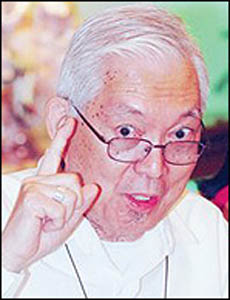
The Archdiocese of Manila has just released the most restrictive application of Summorum Pontificum that I have ever seen. I really cannot understand the implacable opposition of Cardinal Rosales to the Missal of 1962.

http://www.rcam.org/Homilies/2009/cardinal_rosales/archdiocesan_guidelines_on_the_celebration_of_the%20Mass_according_to_the_rite_of_the_roman_missal_published_in_1962.html

ARCHDIOCESAN GUIDELINES ON THE CELEBRATION OF THE MASS ACCORDING TO THE RITE OF THE ROMAN MISSAL PUBLISHED IN 1962 (TRIDENTINE MASS)

In accordance with the norms laid down by the Apostolic Letter, issued motu propio, of His Holiness, Pope Benedict XVI, Summorum Pontificum, We hereby establish the following guidelines and conditions on the celebration of the Mass according to the rite of the Roman Missal published in 1962 (Tridentine Mass) in the Archdiocese of Manila:

The regulation of the celebration of this extraordinary form of the Mass belongs to the Archbishop of Manila, through the Minister of the Ministry for Liturgical Affairs of the Archdiocese of Manila.

This form of Mass is to be celebrated only at the Christ the King Chapel of the Metropolitan Cathedral of Manila once a month, but not on Sundays and Solemnities.

The presider at this form of celebration should be a priest duly appointed by the Archbishop of Manila.

To ensure the solemnity and orderliness of the celebration of this form of Mass, the participation of other ministers (i.e., lectors, Master of Ceremonies, servers, choir, etc.) in the liturgy is to be determined and regulated by the Ministry for Liturgical Affairs of the Archdiocese of Manila.

The celebration of the extraordinary form of the Mass in this Chapel is open to any individual or group in the Archdiocese of Manila who may have the desire to participate in such celebrations. Further requests from individuals or groups from the parishes of or who belong to the Archdiocese of Manila to celebrate this form of Mass is to be directed to join the monthly celebration at the Manila Cathedral.

It is highly encouraged that a missal / booklet of the rite in Latin and English be prepared to help the faithful follow the celebration. It is like wise encouraged that those who will participate in this Mass undergo a catechetical orientation before the celebration.

The Archbishop of Manila has jurisdiction over this celebration and, therefore, can decide to limit or discontinue this monthly celebration anytime he judges that this is not consonance with the whole pastoral direction of the Local Church.

Given in Manila, this 8th day of December 2008.

+GAUDENCIO B. CARDINAL ROSALES
Archbishop of Manila